

Why Karlheinz Stockhausen's Himmelfahrt (2004-05) Version Für Synthesizer, Sop matters
Himmelfahrt (2004-05) Version Für Synthesizer, Sop- Album Overview
Karlheinz Stockhausen's "Himmelfahrt" (2004-05) is a significant work in the realm of contemporary classical music, showcasing the composer’s innovative spirit and vision. Originally conceived as a part of his monumental series "Licht" ("Light"), the piece represents a crucial exploration of the relationship between spirituality and technology. Released by Stockhausen's own label, Stockhausen Verlag, this version for synthesizer and soprano highlights the composer's transition into electronic music, incorporating a blend of synthesized sounds and traditional vocal techniques.
The album features a single track, which unfolds over a duration that encapsulates Stockhausen's intricate compositional style. The synthesizer, manipulated to create a vast sound palette, serves as a canvas for the soprano's ethereal and expressive vocal lines. This version sees collaboration with renowned soprano performers who navigate the complex vocal demands of the score while interacting with the electronic elements.
"Himmelfahrt" is not merely an auditory experience; it is a profound commentary on the modern spiritual condition, addressing themes of ascension and transcendence in a world increasingly dominated by technology. Stockhausen's exploration of sonority and rhythm reflects his continued dedication to pushing the boundaries of what music can express. The work stands as a testament to his belief that music can act as a bridge between the earthly and the divine, making its release a pivotal moment for both the composer and the genre as a whole.
Review
The sound of "Himmelfahrt" is a captivating blend of electronic textures and operatic vocalization, creating an immersive sonic landscape. Stockhausen's use of synthesizers allows for a dynamic range of sounds, from shimmering highs to deep, resonant lows, that complement the soprano’s vocal lines beautifully. The piece maintains a meditative quality, inviting listeners to engage deeply with its themes of spiritual elevation.
Lyrically, while the text is sparse, it is loaded with meaning, echoing Stockhausen’s philosophical musings on existence and the afterlife. The interplay between the synthesized sounds and the human voice creates a dialogue that is both haunting and uplifting, demonstrating Stockhausen's mastery in marrying technology with human emotion. His artistic vision in "Himmelfahrt" is not just about sound but about creating an experience that transcends the physical realm, making the work a cornerstone in the study of modern classical and electronic music.
Highlights
- Innovative fusion of synthesizer and soprano, showcasing Stockhausen's avant-garde approach.
- Deep thematic exploration of spirituality and technology, inviting profound reflection.
- Masterful sound design that creates an immersive and transformative listening experience.
Weak points
- Complexity may alienate listeners unfamiliar with avant-garde music.
- Length of the piece could feel daunting for casual listeners.
- Limited appeal outside of specialized classical and electronic music audiences.
Overall evaluation
"Himmelfahrt" is a landmark work that effectively captures Stockhausen's visionary approach to music in the 21st century. While it may challenge some listeners, its depth and beauty cannot be denied. The synthesis of human voice and electronic sound creates a unique auditory experience that resonates on multiple levels. Personal rating: 9/10
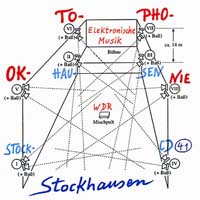 1994Oktophonie
 1980Donnerstag aus Licht
 1969Hymnen
 1960Kontakte