
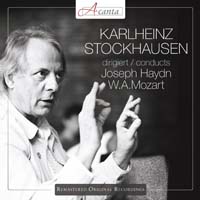
Review of Karlheinz Stockhausen – Gesang Der Jünglinge / Kontakte
Gesang Der Jünglinge / Kontakte- Album Overview
"Gesang Der Jünglinge / Kontakte" is a seminal work by German composer Karlheinz Stockhausen, released in 1963. This album is a significant milestone in the realm of electronic and avant-garde music, showcasing Stockhausen's innovative approach to sound and composition. The album includes two seminal works: "Gesang der Jünglinge" (1955-1956) and "Kontakte" (1958-1960), both of which highlight Stockhausen's pioneering use of electronic techniques and spatialization of sound.
"Gesang der Jünglinge" combines electronically generated sounds with the voice of a boy soprano, creating a unique blend of human emotion and mechanical precision. It was one of the first compositions to integrate live vocal performance with tape music, a groundbreaking achievement for its time. "Kontakte," on the other hand, is an exploration of the interplay between electronic sounds and percussion, further expanding the boundaries of musical expression.
The recording took place at the WDR (Westdeutscher Rundfunk) studio in Cologne, where Stockhausen collaborated with various engineers and musicians to produce and realize his vision. The album was released under the Deutsche Grammophon label, which has been instrumental in promoting contemporary classical music. "Gesang der Jünglinge / Kontakte" is often regarded as a cornerstone of 20th-century music, influencing generations of composers and sound artists.
The cultural significance of this album cannot be overstated; it not only challenged traditional notions of music but also laid the groundwork for future developments in electronic music, sound art, and multimedia performance. Stockhausen's work has inspired countless artists across genres, making this album a must-listen for anyone interested in the evolution of modern music.
Review
The sound of "Gesang der Jünglinge / Kontakte" is both mesmerizing and challenging, embodying Stockhausen's artistic vision of blurring the lines between human voice and electronic soundscapes. The tracks are rich in texture, with "Gesang der Jünglinge" featuring ethereal vocal lines that soar above pulsating electronic undercurrents, creating a dreamlike aura. "Kontakte" shifts the focus to rhythmic complexity and spatial dynamics, immersing listeners in a sonic environment that feels both organic and mechanical.
Stockhausen's use of tape manipulation and spatialization techniques creates a sense of movement and fluidity, as sounds seem to swirl around the listener. The overall experience is immersive, demanding active listening and engagement. Though the abstract nature of the compositions might be daunting for some, the emotional depth and innovative techniques employed by Stockhausen invite listeners to explore new auditory landscapes.
Highlights
- Groundbreaking integration of electronic sounds with live vocals.
- Innovative use of spatialization, enhancing the listening experience.
- Rich emotional depth that challenges traditional musical narratives.
Weak points
- The abstract nature may not appeal to all listeners.
- Lengthy compositions can feel overwhelming at times.
- Requires focused listening, which may deter casual audiences.
Overall evaluation
"Gesang Der Jünglinge / Kontakte" stands as a testament to Karlheinz Stockhausen's visionary approach to music, pushing the boundaries of what sound can convey. While it may not cater to all tastes, its significance in the evolution of electronic music is undeniable.
Personal rating: 9/10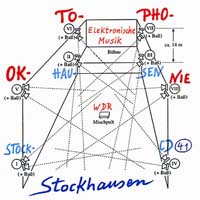 1994Oktophonie
 1980Donnerstag aus Licht
 1969Hymnen
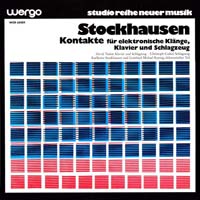 1960Kontakte