ALBUM NOTESThe evolution of Karlheinz Stockhausen-Formel / Schlagtrio / Spiel / Punkte in Formel / Schlagtrio / Spiel / Punkte
Album overview
Karlheinz Stockhausen's "Formel / Schlagtrio / Spiel / Punkte" is a significant work in the realm of contemporary classical music, released in 1971. This album showcases Stockhausen's innovative approach to composition, characterized by his exploration of spatialization and the integral relationship between sound and silence. The album is part of the Deutsche Grammophon label, which has been pivotal in promoting avant-garde music. The recording features a blend of ensemble pieces, including "Formel," "Schlagtrio," "Spiel," and "Punkte," each highlighting Stockhausen's unique structural and sonic experimentation.
Collaborators on this project include prominent musicians and ensembles well-versed in contemporary classical performance, ensuring that Stockhausen's complex notations are brought to life with precision. The tracks explore various themes such as rhythm, timbre, and the use of extended techniques. The album's release during a time of cultural upheaval, particularly in the late 1960s and early 1970s, aligns it with a broader artistic movement that sought to challenge established norms. Stockhausen's works often reflect the philosophical and artistic inquiries of his time, contributing to his reputation as a pioneer of serialism and electronic music.
The album's tracks have also been influential, inspiring a new generation of composers to experiment with sound and form. The recording stands as a testament to Stockhausen's commitment to pushing the boundaries of music and remains a key reference point in discussions of 20th-century avant-garde art.
Review
"Formel / Schlagtrio / Spiel / Punkte" is a striking representation of Karlheinz Stockhausen's artistic vision. The album immerses listeners in a soundscape where traditional harmonic structures are replaced by a focus on texture and timbral variation. The opening track, "Formel," serves as a sonic blueprint, with its intricate layers and demands on performers showcasing Stockhausen’s meticulous attention to detail.
The subsequent pieces, particularly "Schlagtrio," emphasize rhythm and percussion, deploying unconventional instruments and techniques that challenge the listener’s perception of music. Stockhausen's ability to manipulate sound in a spatial context creates an immersive experience, inviting both introspection and exhilaration. The lack of conventional melody may deter some, but for those willing to engage with its complexities, the album offers profound rewards.
Musically, Stockhausen transcends mere composition, he creates a philosophical inquiry into the nature of sound itself. His work compels listeners to reconsider the boundaries of music, making this album a vital contribution to the canon of contemporary classical music. Overall, while its avant-garde nature may not appeal to all, the album stands as a crucial exploration of the evolution of sound in the late 20th century.
Highlights
- Innovative use of rhythm and percussion in "Schlagtrio."
- Complex layering and textural depth throughout the album.
- Cultural significance as a reflection of the avant-garde movement in the 1970s.
Weak points
- Accessibility may be limited for mainstream audiences.
- Some tracks may come across as overly abstract or challenging.
- Lack of traditional melodic elements could alienate conventional classical music fans.
Overall evaluation
"Formel / Schlagtrio / Spiel / Punkte" is a remarkable exploration of sound and structure, showcasing Stockhausen's visionary approach to contemporary music. While it may not cater to all tastes, its significance in the evolution of avant-garde music is undeniable.
Personal rating: 8/10
```

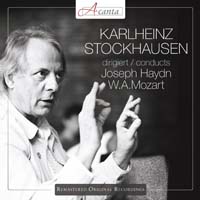
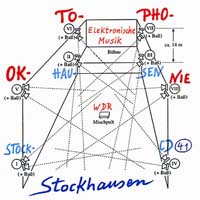 1994Oktophonie
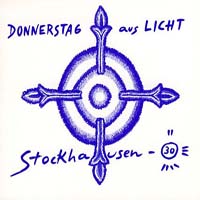 1980Donnerstag aus Licht
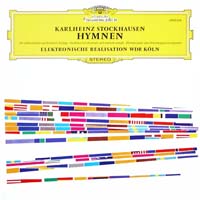 1969Hymnen
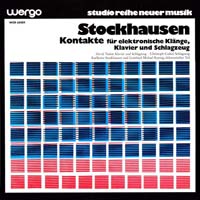 1960Kontakte