ALBUM NOTESAlbum spotlight: Karlheinz Stockhausen-Ceylon / Bird of Passage – Ceylon / Bird of Passage
Album overview
Karlheinz Stockhausen's "Ceylon / Bird of Passage," released in 1976, is a remarkable exploration of electronic and avant-garde music. This album is part of a prolific period for Stockhausen, who is known for his pioneering work in electronic music and spatial composition. It was released under the Stockhausen Foundation for Music, demonstrating the artist's commitment to independence from commercial labels. The album features two major works: "Ceylon," which showcases the blend of traditional instrumentation with electronic manipulation, and "Bird of Passage," an evocative piece that uses voice and sound to create an immersive auditory experience.
The recording process involved collaboration with various musicians and sound engineers, allowing for a rich tapestry of sound that reflects Stockhausen’s innovative techniques. Notably, the album is characterized by its unique approach to sound spatialization, a hallmark of Stockhausen's work, which invites listeners to engage with music as a three-dimensional experience. Although not a mainstream success, "Ceylon / Bird of Passage" has been influential in the realms of contemporary classical and experimental music, inspiring countless artists and composers. The album's significance lies not only in its sonic qualities but also in its conceptual depth, reflecting Stockhausen’s philosophical inquiries into the nature of sound and perception.
Review
"Ceylon / Bird of Passage" offers a challenging yet rewarding listening experience. Stockhausen's ability to merge acoustic sounds with electronic textures creates an unsettling yet fascinating atmosphere. The pieces are meticulously structured, revealing layers of complexity that demand attention and contemplation from the listener. Unlike traditional music that often emphasizes melody and harmony, Stockhausen's work here dives into the realms of sound exploration and spatial dynamics.
The album's strength lies in its capacity to evoke a sense of place and emotion without relying on conventional musical narratives. "Ceylon" presents a vivid auditory landscape that transports listeners to far-off locales, while "Bird of Passage" reflects themes of transience and migration, embodying Stockhausen's interest in the human experience. While the album may not cater to all tastes, its artistic vision is crystal clear—Stockhausen invites us to listen deeply and think critically about the nature of music and sound itself.
Highlights
- Innovative fusion of electronic and acoustic sounds
- Rich spatial dynamics that enhance listener immersion
- Conceptual depth that encourages thoughtful engagement
Weak points
- May be inaccessible to mainstream audiences
- Lengthy compositions might challenge casual listeners
- Lack of traditional musical structure may deter some fans
Overall evaluation
"Karlheinz Stockhausen's 'Ceylon / Bird of Passage' is a bold exploration of sound that pushes the boundaries of musical expression. While it may not resonate with everyone, its artistic merit and innovative approach solidify its place in the canon of contemporary music.
Personal rating: 8/10
```


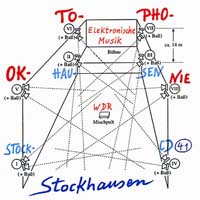 1994Oktophonie
 1980Donnerstag aus Licht
 1969Hymnen
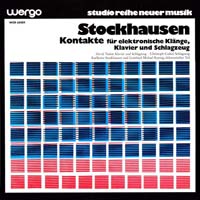 1960Kontakte