

The Four Seasons: what Antonio Vivaldi wants you to feel
The Four Seasons- Album Overview
Antonio Vivaldi's "The Four Seasons" is a set of violin concertos that was composed in 1723 and published in 1725. This landmark work, which consists of four concertos — Spring, Summer, Autumn, and Winter — is a quintessential example of the Baroque era's ability to evoke emotion through music. Each concerto is accompanied by a sonnet, which Vivaldi himself wrote, offering a vivid narrative for listeners to follow. The concertos are characterized by their dynamic contrasts, intricate melodies, and vivid orchestration, showcasing Vivaldi's innovative use of the violin and the orchestra.
Originally published in Amsterdam by Estienne Roger, "The Four Seasons" was part of a larger collection titled "Il cimento dell'armonia e dell'inventione." The album has seen countless recordings over the centuries, with notable interpretations by renowned conductors and violinists such as Antonio Meneses, Itzhak Perlman, and Andrea Marcon. Its enduring appeal is evident in its influence on both classical music and popular culture, with themes from the concertos appearing in various film scores, commercials, and even modern pop music. The album has transcended its original context, becoming not only a staple of classical music repertoires but also a symbol of the Baroque period's artistic achievements.
Review
The sound of "The Four Seasons" is an exquisite tapestry of emotions, masterfully woven together by Vivaldi's genius. Each concerto presents a distinct atmosphere, from the joyful awakening of Spring, marked by its lively rhythms and bright harmonies, to the somber chill of Winter, which evokes a poignant sense of stillness and introspection. Vivaldi's ability to mimic the sounds of nature — the chirping birds of Spring, the crackling thunder of Summer storms, the rustling leaves of Autumn, and the biting cold of Winter — is nothing short of remarkable. The interplay between the solo violin and the string orchestra is particularly noteworthy, as it creates a dialogue that draws the listener into the narrative Vivaldi crafted. The artistic vision behind "The Four Seasons" is a blend of personal expression and a deep connection to the natural world. Vivaldi's virtuosic violin passages showcase not only technical prowess but also an emotional depth that resonates with audiences, making this work timeless. The concertos serve not only as entertainment but as a meditation on the changing seasons of life, encapsulating the beauty and transience of nature.
Highlights
- Innovative use of the violin, showcasing Vivaldi's technical brilliance.
- Vivid emotional storytelling through music, enhanced by accompanying sonnets.
- Timeless appeal, influencing a wide range of musical genres beyond classical.
Weak points
- The repetitive themes in some movements may feel formulaic to contemporary listeners.
- Modern interpretations can sometimes overshadow the original Baroque context.
- Limited use of harmonic diversity, as the focus is primarily on melody and texture.
Overall evaluation
"The Four Seasons" is a monumental work that captures the essence of human emotion through the lens of nature. Vivaldi's masterful composition continues to resonate with listeners, bridging the gap between the past and present. It remains a must-listen for anyone interested in classical music and its cultural significance.
Personal rating: 9/10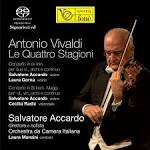 1981Le Quattro Stagioni