

From intro to finale: what The Four Seasons delivers
The Four Seasons- Album Overview
Antonio Vivaldi's "The Four Seasons," composed in 1723 and published in 1725 as part of a larger collection titled "Il cimento dell'armonia e dell'inventione," is one of the most recognizable pieces of classical music. Vivaldi, an Italian Baroque composer, violinist, and priest, wrote this work for solo violin, string orchestra, and basso continuo, capturing the essence of the changing seasons through music. Each of the four concertos—Spring, Summer, Autumn, and Winter—transports the listener through vivid musical imagery, showcasing Vivaldi's innovative use of form and structure. The concertos were originally published by the Amsterdam-based Estienne Roger and have since been recorded and performed countless times, solidifying their place in the classical canon. The piece's significance lies not only in its musical brilliance but also in its early use of programmatic elements, where music tells a story or depicts scenes, a trend that would influence generations of composers. Collaborators on various recordings include renowned violinists and conductors, such as Itzhak Perlman and Antonio Pappano, each bringing their interpretation to Vivaldi's masterpiece. The album remains a staple in both classical music education and popular culture, often featured in films, commercials, and various media. Its enduring appeal is a testament to Vivaldi's genius and the universal language of music.
Review
"The Four Seasons" is a masterclass in musical storytelling, with each concerto evoking the distinctive characteristics of its respective season. Vivaldi's virtuosic violin passages are both technically demanding and emotionally resonant, creating an exhilarating listening experience. The rhythmic vitality and dynamic contrasts found throughout the work are hallmarks of Vivaldi's style, which seamlessly blend exuberance and tranquility. The opening movement of "Spring" bursts forth with optimism, marked by bright, jubilant melodies that evoke blooming flowers and the return of life after winter. In contrast, "Summer" intensifies with dramatic storms and simmering heat, showcasing Vivaldi's ability to translate natural phenomena into sound. "Autumn" offers a pastoral scene of harvest and celebration, while "Winter" chillingly captures the starkness of the cold through its stark contrasts and shivering motifs. Vivaldi's artistic vision is not merely technical; it is deeply rooted in the human experience, making "The Four Seasons" universally relatable. The album's structure, which alternates between lively and contemplative themes, keeps the listener engaged and illustrates the composer’s prowess in balancing contrasting emotions.
Highlights
- Vivid musical imagery that evokes the essence of each season.
- Innovative use of form and structure, blending technical virtuosity with emotional depth.
- Enduring cultural significance, influencing countless composers and genres.
Weak points
- Some interpretations can feel overly romanticized, straying from Vivaldi's original intent.
- The frequent use in popular media may dilute the piece's impact for some listeners.
- Overexposure in classical repertoire may lead to listener fatigue.
Overall evaluation
Antonio Vivaldi's "The Four Seasons" remains a monumental work in the classical music landscape, celebrated for its innovative storytelling through sound. Its ability to connect with audiences across centuries is a testament to Vivaldi's mastery of composition.
Personal rating: 9/10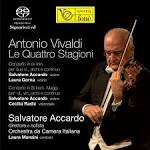 1981Le Quattro Stagioni