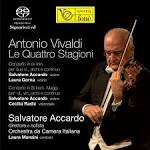
ALBUM NOTESInside the atmosphere of Antonio Vivaldi's Die Vier Jahreszeiten / Concerto Nr. 5 A-moll, Pv
Die Vier Jahreszeiten / Concerto Nr. 5 A-moll, Pv - Album Overview
Antonio Vivaldi's "Die Vier Jahreszeiten" (The Four Seasons) is one of the most famous and enduring works in the classical music canon, with the original release occurring in 1725 as part of a collection titled "Il cimento dell'armonia e dell'inventione" (The Contest Between Harmony and Invention). The piece comprises four violin concertos, each representing a season of the year. "Concerto Nr. 5 in A minor, Pv" (RV 356) is often regarded as a lesser-known gem within this collection, showcasing Vivaldi's unique ability to convey natural imagery through music.
The album has been released by numerous labels over the years, with various interpretations and recordings emerging since its inception. One of the most notable modern recordings was produced by renowned violinist Anne-Sophie Mutter, released in 1991 under Deutsche Grammophon. Collaborators on this album typically include orchestral ensembles that specialize in Baroque repertoire, bringing Vivaldi's intricate compositions to life with both authenticity and flair.
"Die Vier Jahreszeiten" has had an indelible impact on Western classical music, influencing countless composers and musicians across genres. Its vivid depictions of nature have made it a staple in concert halls around the world and a fixture in popular culture, frequently appearing in films, advertisements, and television shows. Each concerto is paired with sonnets that Vivaldi wrote himself, further enhancing the narrative quality of the music. The atmospheric depth of "Concerto Nr. 5" captures the essence of Vivaldi's innovative spirit, marking a significant contribution to the Baroque period and the evolution of the concerto form.
Review
Vivaldi's "Die Vier Jahreszeiten / Concerto Nr. 5 A-moll, Pv" is a testament to the composer's genius in translating the essence of seasonal change into aural experiences. The distinctive rhythms and melodic lines create an immediate connection to nature, evoking images of the changing landscape with every note. The use of the violin as the principal instrument is particularly effective, allowing for a wide range of emotional expression, from the lightness of spring to the introspective tones of autumn.
The orchestration in this work is masterful; Vivaldi intricately weaves together strings, woodwinds, and continuo, creating a rich tapestry of sound that transports the listener into the heart of each season. Particularly noteworthy is the way in which Vivaldi utilizes dynamics to reflect the contrasts inherent in seasonal transitions — from the gentle breezes of spring to the tempestuous storms of winter.
While there are no traditional lyrics in this instrumental work, the sonnets that accompany each concerto provide a narrative framework that enhances the listening experience. The artistic vision behind this piece is rooted in a deep appreciation for nature and an understanding of how music can illustrate its beauty and complexity.
Highlights
- Exceptional use of instrumentation that captures the essence of each season.
- Vivid emotional landscapes conveyed through dynamic contrasts and melodic lines.
- Rich historical and cultural significance, showcasing Vivaldi's innovative approach to the concerto form.
Weak points
- Some listeners may find the more obscure concertos, like Concerto Nr. 5, overshadowed by the more popular ones.
- The absence of lyrics may limit engagement for those who prefer vocal music.
- Modern interpretations can sometimes stray too far from Vivaldi’s original intent, affecting authenticity.
Overall evaluation
Vivaldi's "Die Vier Jahreszeiten / Concerto Nr. 5 A-moll, Pv" is a remarkable achievement that encapsulates the beauty of nature through music. Its enduring legacy continues to inspire and engage audiences worldwide, making it an essential listen for both classical aficionados and casual listeners alike.
Personal rating: 9/10


 1981Le Quattro Stagioni