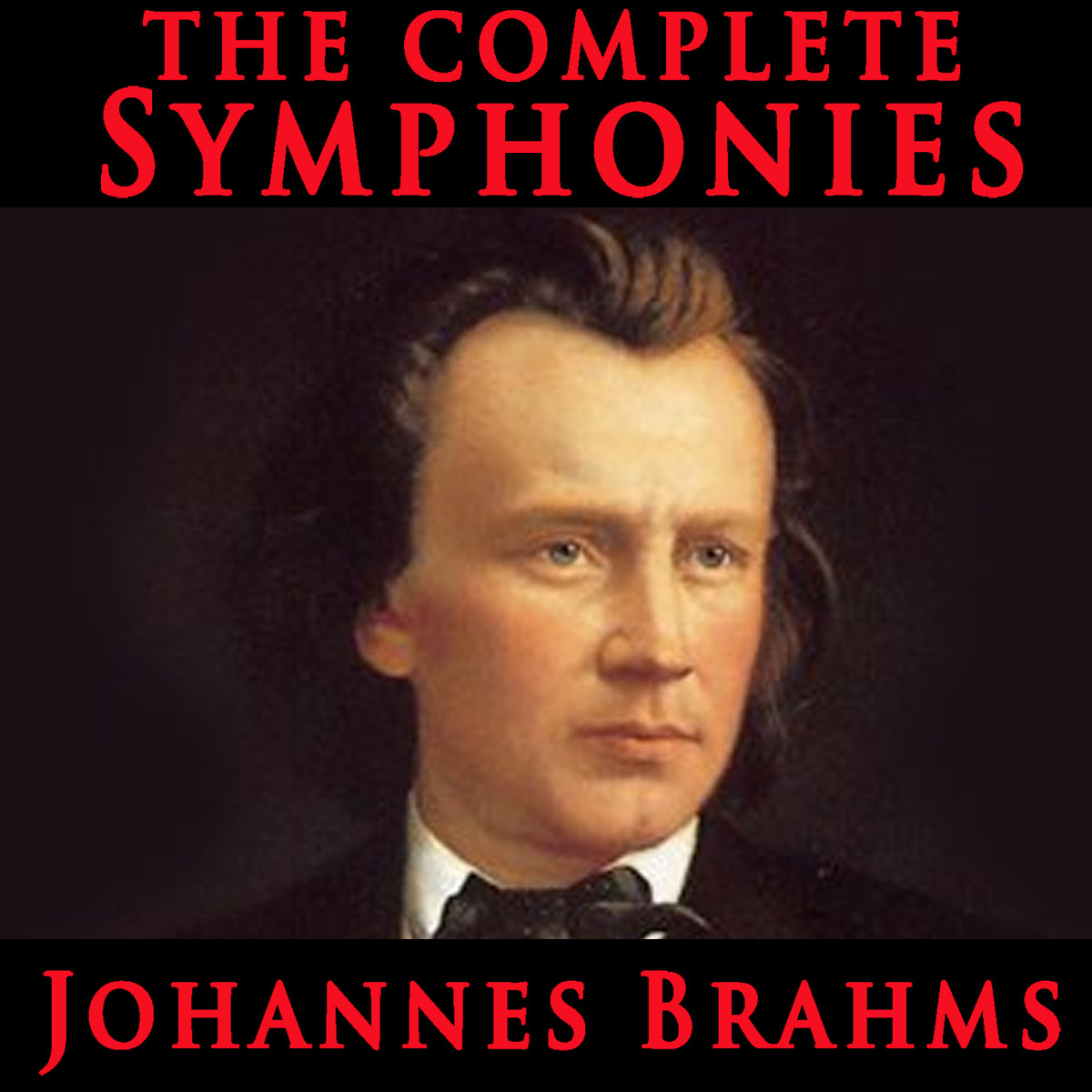
ALBUM NOTESListening guide: Johannes Brahms's Symphonie Nr. 3 / Haydn-variationen
Symphonie Nr. 3 / Haydn-variationen- Album Overview
Johannes Brahms's "Symphonie Nr. 3 / Haydn-variationen" is an essential entry in the orchestral canon, showcasing the composer’s mastery of form and emotion. Released in 1884, this album features two significant works: the Third Symphony in F major, Op. 90, and the Variations on a Theme by Haydn, Op. 56a. The symphony is particularly notable for its lyrical qualities and the famous "Allegretto" second movement, which has become one of Brahms's most beloved melodies. This recording has been produced under various labels, with notable performances by prestigious orchestras throughout the decades, including the Berlin Philharmonic and the Vienna Philharmonic.
The Haydn Variations, based on a theme from Haydn's "St. Anthony's Day," reveal Brahms's innovative approach to orchestral variation, blending classical form with his distinct Romantic sensibility. The album has seen multiple recordings, each offering a different interpretation of Brahms's intricate orchestration and emotional depth. Collaborators on various recordings include renowned conductors like Herbert von Karajan and Gustavo Dudamel, who bring their unique insights into Brahms's work. The album has garnered significant acclaim in both classical music circles and broader cultural contexts, often praised for its emotional breadth and technical sophistication.
Review
Brahms’s "Symphonie Nr. 3 / Haydn-variationen" encapsulates the essence of late Romantic orchestral music, marked by lush harmonies and intricate counterpoint. The symphony opens with a vigorous "Allegro con brio," establishing a vigorous thematic material that is deftly developed throughout the movement. The "Allegretto" serves as a poignant contrast, showcasing Brahms’s gift for melody and emotional nuance, while the "Poco Allegretto" wraps up the symphony with a sense of resolution and warmth.
The Haydn Variations demonstrate Brahms's exceptional skill in thematic transformation, where each variation presents a different perspective on the original theme. It is a delightful exploration of orchestral color, with Brahms employing a wide range of instrumentation to evoke various moods. The recording quality across different releases has consistently highlighted the clarity of Brahms's orchestration, allowing listeners to appreciate the subtleties in dynamics and texture. Overall, the album stands as a testament to Brahms’s artistic vision, merging traditional forms with a deeply personal expressive language.
Highlights
- Emotionally powerful melodies, especially in the "Allegretto" movement.
- Masterful orchestration that showcases Brahms's unique voice.
- Innovative thematic development in the Haydn Variations.
Weak points
- Some listeners may find the symphony's slower passages less engaging.
- Occasional recordings may lack the vibrancy of live performances.
- Complexity of the music may be challenging for casual listeners.
Overall evaluation
Brahms's "Symphonie Nr. 3 / Haydn-variationen" is a landmark album that beautifully balances emotional depth and technical mastery. It remains a significant work in the orchestral repertoire, appealing to both seasoned classical enthusiasts and newcomers alike.
Personal rating: 9/10