ALBUM NOTESListening guide: Sergei Rachmaninoff's Symphony No. 3 / Symphonic Dances
Symphony No. 3 / Symphonic Dances- Album Overview
Sergei Rachmaninoff's "Symphony No. 3 / Symphonic Dances" is a remarkable collection that showcases the composer's later works, originally released in 1947, on the RCA Victor label. The album features two significant orchestral pieces: Symphony No. 3 in A minor, Op. 44, and Symphonic Dances, Op. 45. These compositions mark Rachmaninoff's mature style, blending lush harmonies with Russian melodies, reflecting his emotional depth and technical prowess.
The Symphony No. 3, completed in 1936, is often regarded as one of Rachmaninoff's most sophisticated works, characterized by its contrasting themes and intricate orchestration. It explores various emotional landscapes, leading listeners through a journey of introspection and grandeur. On the other hand, the Symphonic Dances, composed in 1940, represents Rachmaninoff's final orchestral work. It is infused with rhythmic vitality and vivid orchestral color, showcasing a blend of Russian folk elements and modernist influences.
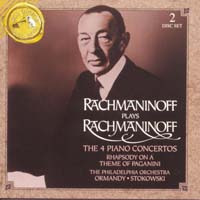
The album features performances by the Philadelphia Orchestra, conducted by the esteemed Eugene Ormandy, whose interpretations highlight the emotional nuances and technical demands of Rachmaninoff's compositions. The recording quality is exceptional, capturing the richness of the orchestral sound. This album is not just a testament to Rachmaninoff's genius but also a pivotal moment in 20th-century classical music, reflecting the cultural shifts of the time and the composer's adaptation to changing musical landscapes.
Review
Rachmaninoff's "Symphony No. 3 / Symphonic Dances" is a masterclass in orchestral writing, combining lush melodies and intricate textures that evoke a profound emotional response. The Symphony No. 3 opens with an expansive lyrical theme that evolves into a complex tapestry of sound, showcasing Rachmaninoff's ability to blend traditional melodies with innovative orchestral techniques. The second movement is particularly striking, featuring a haunting oboe solo that leads into a powerful, climactic finale, demonstrating the composer's command of form and structure.
In contrast, the Symphonic Dances offers a more vibrant and dance-like quality, with rhythmic drive and lively orchestrations. The use of contrasting themes and intricate counterpoint creates a dynamic listening experience, allowing the audience to engage with the music on multiple levels. Throughout the album, the Philadelphia Orchestra delivers a performance that is both polished and passionate, with Ormandy's direction bringing out the subtleties and grandeur of Rachmaninoff's writing.
Overall, this album serves as a brilliant showcase of Rachmaninoff's artistic vision, capturing the essence of his style while also reflecting the broader cultural context of the time.
Highlights
- Rich orchestration that showcases Rachmaninoff's mastery of the symphonic form.
- Exceptional performances by the Philadelphia Orchestra under Eugene Ormandy's baton.
- Emotional depth and diversity of themes that invite deep listener engagement.
Weak points
- The length of the Symphony No. 3 may challenge some listeners' attention spans.
- Some may find the emotional weight of the pieces overwhelming or dense.
- Limited accessibility for those unfamiliar with classical music structures.
Overall evaluation
Rachmaninoff's "Symphony No. 3 / Symphonic Dances" is a profound exploration of emotion and orchestral color, showcasing the composer's late style at its finest. This album is a must-listen for classical music enthusiasts and a significant contribution to the orchestral repertoire.
Personal rating: 9/10