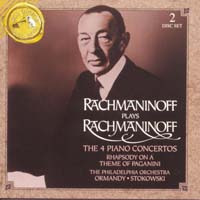
ALBUM NOTESInside Rachmaninov: Symphony No.3 / Youth Symphony by Sergei Rachmaninoff
Rachmaninov: Symphony No.3 / Youth Symphony- Album Overview
Sergei Rachmaninoff's "Symphony No. 3 / Youth Symphony" is a distinguished collection showcasing two significant works by the composer, released in 2015 under the prestigious label, Deutsche Grammophon. The album features the London Symphony Orchestra, conducted by the acclaimed maestro, Andrey Boreyko. Rachmaninoff's Symphony No. 3, composed in 1936, is known for its lush orchestration and emotional depth, reflecting the composer's introspective nature during a tumultuous period in his life. The Youth Symphony, Rachmaninoff's earliest orchestral work, showcases his precocious talent and hints at the stylistic developments that would define his later compositions.
The recording process involved state-of-the-art technology to capture the rich textures and intricate nuances of Rachmaninoff's scores. Collaborators on this project included various accomplished musicians from the London Symphony Orchestra, all of whom brought their expertise and artistry to the performance. The album also includes notable tracks such as the poignant "Adagio" from Symphony No. 3, which has become emblematic of Rachmaninoff’s lyrical style.
Musically, this album is significant as it juxtaposes Rachmaninoff’s early and later works, providing listeners with insight into his evolution as a composer. The cultural significance of Rachmaninoff's music during the 20th century cannot be overstated; his works resonate with both the melancholy and the grandeur of the human experience, making them timeless staples in the classical repertoire. The album has garnered critical acclaim, inviting both long-time fans and new listeners to explore the depths of Rachmaninoff's genius.
Review
This album offers a compelling auditory journey through Rachmaninoff's emotional landscape. The London Symphony Orchestra, under Boreyko's direction, delivers a performance that is both technically proficient and deeply expressive. In Symphony No. 3, the orchestra navigates the work's complex themes with finesse, showcasing the lush harmonies and intricate orchestration that Rachmaninoff is celebrated for. The "Adagio" movement stands out, with its haunting melodies and rich orchestral colors that evoke a sense of nostalgia and longing.
In contrast, the Youth Symphony reflects the youthful exuberance and raw talent of a young Rachmaninoff. While not as polished as his later works, it provides a fascinating glimpse into the mind of a budding composer. The energy and enthusiasm captured in this piece are infectious, marking an exciting start to his illustrious career. However, the juxtaposition of these two works can also highlight the disparity in maturity between the compositions, occasionally leading to a lack of cohesion for some listeners.
Overall, the album is a testament to Rachmaninoff's mastery of orchestral writing, offering a rich tapestry of sound that continues to resonate with audiences today.
Highlights
- Beautiful orchestration that captures the emotional depth of Rachmaninoff's music.
- Exceptional performance by the London Symphony Orchestra, showcasing technical prowess and expressiveness.
- Insightful juxtaposition of Rachmaninoff's early and late works, providing a comprehensive view of his artistic evolution.
Weak points
- The Youth Symphony may feel less cohesive compared to the more mature Symphony No. 3.
- Some listeners might find the slower movements too indulgent or lengthy.
- Limited appeal for those unfamiliar with Rachmaninoff's style, as it requires a certain appreciation for classical nuances.
Overall evaluation
"Rachmaninoff: Symphony No.3 / Youth Symphony" is a beautifully crafted album that showcases the profound emotional spectrum of one of classical music's great composers. It is a must-listen for Rachmaninoff enthusiasts and a solid entry point for new listeners.