
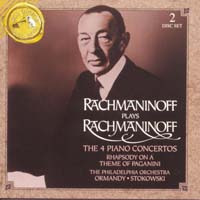
Sergei Rachmaninoff returns with 3rd. Piano Concerto
3rd. Piano Concerto- Album Overview
The "Piano Concerto No. 3 in D minor, Op. 30," composed by Sergei Rachmaninoff in 1909, is one of the most celebrated works in the piano repertoire. This concerto was premiered by the composer himself on November 28, 1909, at the New York Symphony Society, showcasing his exceptional talent as both a pianist and a composer. The piece is known for its technical difficulty and emotional depth, making it a favorite among concert pianists and audiences alike.
Rachmaninoff wrote the concerto during a particularly productive period in his career, following his successful Second Piano Concerto. The work is structured in three movements, each exploring a wide range of emotions and showcasing Rachmaninoff's lush harmonic language. The concerto has been recorded numerous times, with prominent pianists like Horace Parlan, Vladimir Horowitz, and more recently, Daniil Trifonov bringing their interpretations to life. It was released under various labels, including RCA and Deutsche Grammophon, with countless orchestras performing it worldwide.
The cultural significance of Rachmaninoff's Piano Concerto No. 3 cannot be overstated; it has appeared in films, notably in "Shine," which tells the story of pianist David Helfgott, and has become a benchmark for pianists aspiring to showcase their virtuosity. The piece continues to resonate with audiences for its lyrical beauty and dramatic contrasts, solidifying Rachmaninoff's legacy as one of the greatest composers of the Romantic era.
Review
Rachmaninoff's "Piano Concerto No. 3" is a monumental work that effortlessly combines technical prowess with profound emotional expression. The concerto opens with a bold and powerful orchestral introduction that sets the stage for the piano's entrance, which is nothing short of electrifying. The first movement unfolds with a sense of urgency, filled with sweeping melodies and intricate passages that demand incredible skill from the pianist. The second movement, marked by its introspective and lyrical quality, allows for a moment of reflection, showcasing the beauty of Rachmaninoff's harmonic language.
The final movement bursts forth with exuberance, incorporating a variety of themes and motifs that culminate in a spectacular and triumphant conclusion. Rachmaninoff's ability to blend technical complexity with emotional depth makes this concerto a true masterpiece. The orchestration is rich and vibrant, providing a lush backdrop for the piano, while the interplay between the soloist and the orchestra is masterfully crafted. Overall, the "Third Piano Concerto" stands as a testament to Rachmaninoff's genius, capturing the listener's heart with its passion and intensity.
Highlights
- Virtuosic piano passages that showcase incredible technical skill
- Emotional depth and lyrical beauty, particularly in the second movement
- A rich orchestral texture that enhances the overall experience
Weak points
- Its technical demands may overshadow the emotional connection for some performers
- The length of the concerto can be daunting for certain audiences
- Occasional moments of over-complexity might alienate listeners unfamiliar with classical music
Overall evaluation
Rachmaninoff's "Third Piano Concerto" is an extraordinary work that captures the essence of his compositional genius, blending technical brilliance with emotional depth. It remains a cornerstone of the piano repertoire and is essential listening for any classical music enthusiast.
Personal rating: 9/10