
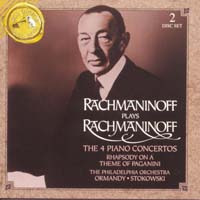
Check the vibes: Sergei Rachmaninoff – Rachmaninoff Symphony No. 2
Rachmaninoff Symphony No. 2- Album Overview
Sergei Rachmaninoff's Symphony No. 2 in E minor, Op. 27, was premiered in 1908 and is one of the composer’s most celebrated orchestral works. The piece reflects Rachmaninoff's profound understanding of orchestration and his ability to weave complex emotional narratives through music. It was composed during a period of personal struggle for Rachmaninoff, following the critical failure of his First Symphony, and marks a significant turning point in his career. The symphony was first performed by the Moscow Philharmonic Orchestra under the baton of the composer himself, and it has since been a staple in the orchestral repertoire. The symphony is structured in four movements, each contributing to the overarching emotional arc of the work. The lush melodies and intricate harmonies showcase Rachmaninoff's distinctive Romantic style, characterized by rich textures and sweeping thematic development. The work was recorded by numerous orchestras and conductors over the decades, further cementing its status in classical music. Notably, the symphony has been recorded by prestigious labels such as RCA, Deutsche Grammophon, and Chandos, with interpretations from renowned conductors like Leonard Bernstein and Valery Gergiev. The second movement, marked by its lyrical beauty, remains a favorite, often performed as a standalone piece in concert settings. Rachmaninoff's Symphony No. 2 not only demonstrates his compositional prowess but also reflects the cultural zeitgeist of early 20th-century Russia, making it a significant work in the canon of classical music.
Review
The Symphony No. 2 is a masterclass in orchestral writing, with Rachmaninoff employing a rich palette of colors and dynamic contrasts that evoke a wide range of emotions. From the brooding intensity of the first movement to the sweeping, romantic themes of the second, the symphony captures the listener's imagination and takes them on an emotional journey. The conductor's interpretation plays a crucial role in conveying the piece's subtleties, with pacing and dynamics that can amplify the work's inherent drama. Rachmaninoff's use of melody is particularly noteworthy; the themes are memorable and often poignant, reflecting his deep understanding of human emotion. The third movement offers a contrasting lightness, while the finale returns to the grandeur and intensity of the opening, closing the symphony on a triumphant note. The orchestration is lush yet transparent, allowing individual instruments to shine while contributing to the overall texture. While the symphony has been praised for its emotional depth and technical mastery, some critics argue that its reliance on traditional forms can feel predictable. However, Rachmaninoff's unique voice and ability to evoke profound feelings ensure that the work remains captivating and relevant, resonating with audiences across generations.
Highlights
- Luxurious orchestration that showcases Rachmaninoff's mastery of texture.
- Memorable melodies and emotional depth that resonate with listeners.
- Significant cultural impact, reflecting early 20th-century Russian music.
Weak points
- Some may find the structure predictable compared to modern symphonic works.
- Occasional moments of overindulgence in sentimentality.
- Long duration may challenge the attention span of casual listeners.
Overall evaluation
Rachmaninoff's Symphony No. 2 is a monumental work that encapsulates the emotional and musical richness of the early 20th century. Its lush melodies and intricate orchestration continue to captivate audiences, making it a timeless piece in the classical repertoire.
Personal rating: 9/10