
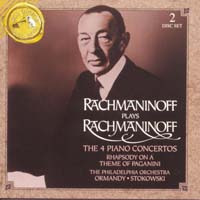
How Sergei Rachmaninoff shaped the sound of Symphony No. 1 In D Minor, Op. 13
Symphony No. 1 In D Minor, Op. 13- Album Overview
Sergei Rachmaninoff's "Symphony No. 1 in D Minor, Op. 13" was composed in 1895, marking the young composer's entry into the orchestral realm. Despite its initial poor reception at its premiere in St. Petersburg, the symphony has since gained recognition for its lush orchestration and emotional depth. The symphony was recorded multiple times, with notable versions emerging from the 20th century, showcasing Rachmaninoff's evolving style. The work is characterized by its Romantic influences, rich melodies, and complex harmonies, reflecting both the Russian musical tradition and Rachmaninoff's unique voice. The symphony was recorded by various labels, with some of the most acclaimed interpretations released under Deutsche Grammophon and RCA Victor. Notable conductors such as Eugene Ormandy and Leonard Bernstein have brought their interpretations to life, further enriching the work’s legacy. The original score was meticulously crafted, revealing Rachmaninoff's mastery of orchestration and thematic development, even at a young age. The symphony is divided into four movements, each marked by contrasting moods and intricate musical dialogue. Its subsequent rediscovery in the 1960s led to a resurgence of interest, allowing audiences to appreciate the depth of Rachmaninoff’s early work.
Review
Rachmaninoff's "Symphony No. 1" is a compelling exploration of the emotional landscape that the composer would continue to navigate throughout his career. The symphony opens with an imposing introduction, immediately establishing a sense of drama and foreboding. The first movement, Allegro, unfolds with lyrical themes that are both haunting and beautiful, showcasing Rachmaninoff's penchant for melodic invention. The orchestration is particularly noteworthy; Rachmaninoff employs a rich palette of instrumental colors, allowing for a deep emotional resonance that is particularly evident in the second movement's melancholy. As the work progresses, the intricate interplay between strings and woodwinds creates a tapestry of sound that captivates the listener. The final movement brings a culmination of themes and motifs, culminating in a powerful conclusion that feels both triumphant and reflective. Overall, the symphony stands as a testament to Rachmaninoff's artistic vision and his ability to convey profound emotional experiences through orchestral music, making it a significant milestone in the canon of late Romantic compositions.
Highlights
- Rich orchestration that showcases Rachmaninoff's mastery of instrumental color.
- Emotionally charged melodies that resonate with listeners.
- A compelling narrative arc that captures a range of feelings from despair to triumph.
Weak points
- Initial reception was overwhelmingly negative, causing a delay in its recognition.
- The complexity of the score may pose challenges for some orchestras.
- Some listeners may find the emotional weight overwhelming or dense at times.
Overall evaluation
Rachmaninoff's "Symphony No. 1" is a profoundly moving work that showcases his early compositional prowess and emotional depth. Despite its rocky beginnings, the symphony has carved out a respected place in the orchestral repertoire. It serves as a poignant reminder of Rachmaninoff's contributions to the Romantic tradition and his ability to connect with audiences through the power of music.
Personal rating: 8/10