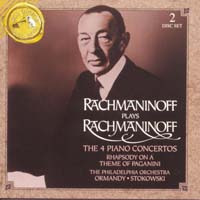
ALBUM NOTESA closer look at Sergei Rachmaninoff's album The Bells / Symphonic Dances
The Bells / Symphonic Dances- Album Overview
Sergei Rachmaninoff’s “The Bells / Symphonic Dances” is a remarkable compilation that showcases the composer’s profound orchestral mastery and his ability to evoke deep emotional resonance through music. Released in 1947 by the RCA Victor label, this album features two of Rachmaninoff's later works, “The Bells,” a choral symphony based on Edgar Allan Poe's poem, and “Symphonic Dances,” one of his final compositions.
“The Bells” was composed in 1913 and reflects Rachmaninoff's interest in choral music, combining rich orchestration with poignant vocal lines delivered by a choir. The piece is comprised of four movements, each depicting different aspects of life and death, resonating with the themes of transience and nostalgia.
“Symphonic Dances,” composed in 1940, showcases a more modernist approach, blending elements of jazz and Russian folk melodies into a lush orchestral texture. This work is notable not only for its rhythmic vitality but also for its exploration of spiritual themes, representing Rachmaninoff's reflections on his own life and the world around him.
The recording features notable collaborators, including the Philadelphia Orchestra under the baton of the esteemed conductor Eugene Ormandy, whose interpretative prowess brings out the intricate details and emotional depth of these works. The album has gained significant acclaim for its lush orchestration and the emotive performances that capture the essence of Rachmaninoff’s late style.
Through this album, listeners are not only treated to exquisite music but also invited to engage with Rachmaninoff's unique cultural heritage, making “The Bells / Symphonic Dances” a vital contribution to the classical music canon.
Review
Rachmaninoff's orchestral works are characterized by their lush harmonies and intricate counterpoint, and “The Bells / Symphonic Dances” is no exception. The album opens with “The Bells,” where the rich textures of the orchestra intertwine with haunting choral passages, creating a tapestry of sound that is both ethereal and grounded. The performances are imbued with a sense of urgency and depth, capturing the essence of Rachmaninoff's emotional landscape.
In contrast, “Symphonic Dances” presents a more vibrant and rhythmic energy, embodying a blend of the traditional and the contemporary. The syncopated rhythms and jazz influences are particularly striking, showcasing Rachmaninoff’s adaptability and evolution as a composer. The thrilling climaxes and intricate orchestration highlight the composer’s technical brilliance and profound emotional depth.
Overall, this album succeeds in encapsulating Rachmaninoff's artistic vision, offering listeners a journey through his sonic landscapes, rich in both nostalgia and innovation.
Highlights
- The seamless blend of orchestral and choral elements in “The Bells.”
- The rhythmic vitality and jazz influences in “Symphonic Dances.”
- The exceptional performance quality by the Philadelphia Orchestra and Eugene Ormandy.
Weak points
- The choral sections may feel less accessible to those unfamiliar with classical choral works.
- Some listeners may find the emotional weight of the pieces to be overwhelming.
- The recording quality, while excellent for its time, may not meet modern audiophile standards.
Overall evaluation
“The Bells / Symphonic Dances” is a significant testament to Rachmaninoff's legacy, offering a blend of rich emotions and intricate compositions. It stands as an essential listen for any classical music enthusiast, showcasing the depth and complexity of Rachmaninoff's late works.
Personal rating: 9/10