
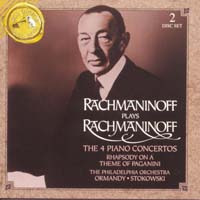
Unpacking Sergei Rachmaninoff's Symphonie No. 3 / Die Toteninsel
Symphonie No. 3 / Die Toteninsel- Album Overview
Released in 1947, Sergei Rachmaninoff's "Symphonie No. 3 / Die Toteninsel" features a profound exploration of orchestral color and emotional depth, encapsulating the composer's late style. The album, recorded under the RCA Victor label, showcases two pivotal works: the Symphony No. 3 in A minor, Op. 44 and "Die Toteninsel" (The Isle of the Dead), Op. 29. The Symphony No. 3 was composed during Rachmaninoff's later years in America and reflects a more introspective and lyrical side of his artistry, diverging from the dramatic flair of his earlier compositions. The piece was first conducted by the composer himself in 1936, while "Die Toteninsel," inspired by Arnold Böcklin's painting of the same name, was composed in 1909 and is known for its haunting melodies and rich orchestration.
This recording features the esteemed Philadelphia Orchestra, conducted by the legendary Leopold Stokowski, whose interpretative prowess brings a distinct vibrancy to Rachmaninoff's works. Stokowski's collaboration with Rachmaninoff is historically significant, as it showcases the conductor's ability to draw out the emotional core of the music. The album stands as a testament to the cultural significance of Rachmaninoff's contributions to 20th-century classical music, bridging the gap between Romanticism and modern orchestral techniques. The lush harmonic language and intricate textures in both works reflect the composer’s introspections on themes of mortality and memory, offering listeners a profound auditory experience.
Review
The album opens with Symphony No. 3, where Rachmaninoff masterfully weaves together lyricism and dramatic intensity. The first movement unfolds with an elegant main theme, soon developing into rich counterpoint and complex orchestral layers. The second movement is particularly striking, characterized by its playful yet melancholic character, showcasing Rachmaninoff's ability to blend joy with a sense of longing. The finale is a powerful culmination, filled with both rhythmic drive and lyrical beauty, leaving the listener in a state of contemplative resolution.
In "Die Toteninsel," the orchestral textures evoke a vivid sense of atmosphere, transporting listeners to the eerie shores of Böcklin's vision. The piece's dark, brooding quality is punctuated by moments of poignant beauty, and the thematic development is executed with meticulous care. Rachmaninoff's orchestration masterfully balances the haunting motifs against rich brass and woodwind colors, creating a tapestry of sound that is both haunting and captivating.
Overall, the album is a testament to Rachmaninoff's genius in orchestral writing, combining emotional depth with exquisite craftsmanship. Both works are delivered with a sense of urgency and passion that is emblematic of Rachmaninoff's late style, making this recording a must-listen for anyone seeking to understand the breadth of his musical legacy.
Highlights
- Rich orchestral textures and emotional depth in both works.
- Masterful performance by the Philadelphia Orchestra under Leopold Stokowski.
- Insightful interpretation of Rachmaninoff's late compositional style.
Weak points
- Some listeners might find the slower tempos in the Symphony No. 3 challenging.
- The recording quality, while good for its time, may not match modern standards.
- The album may be less accessible to those unfamiliar with Rachmaninoff's style.
Overall evaluation
Overall, "Symphonie No. 3 / Die Toteninsel" is a profound exploration of Rachmaninoff's orchestral mastery, encapsulating his emotional depth and craftsmanship. The combination of