
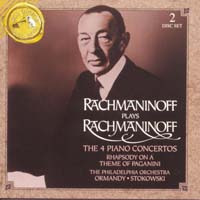
Sergei Rachmaninoff experiments boldly on Rachmaninoff: Piano Concerto No. 4 / Saint-saëns:
Rachmaninoff: Piano Concerto No. 4 / Saint-saëns: - Album Overview
The album "Rachmaninoff: Piano Concerto No. 4 / Saint-Saëns" was released in 2016 under the renowned label, Deutsche Grammophon. Featuring the acclaimed pianist Daniil Trifonov, this recording showcases not only Rachmaninoff's fourth piano concerto, a work that explores complex emotional landscapes, but also Camille Saint-Saëns' Piano Concerto No. 2. The production was helmed by the esteemed conductor and collaborator, Valery Gergiev, along with the Mariinsky Orchestra, lending a rich texture to the performances.
Rachmaninoff's Piano Concerto No. 4, composed in 1926, is often overshadowed by its predecessors; however, it is a significant piece in his oeuvre that demonstrates his evolution as a composer. This concerto is characterized by its intricate melodies and complex harmonies, marked by a bold departure from traditional structures. The recording captures the nuanced interplay between the piano and orchestra, highlighting Trifonov's virtuosity and interpretative depth.
Saint-Saëns' Piano Concerto No. 2, composed in 1858, serves as a compelling contrast, showcasing the French composer's lyrical style and rhythmic vitality. The combination of these two works offers listeners a unique perspective on the development of the piano concerto through different eras and styles.
This album not only serves as a testament to the individual talents of Trifonov and Gergiev but also contributes to the broader canon of classical music recordings. The stunning production quality and the musicians' synergy create an immersive listening experience. The album has since been recognized for its artistic merit, garnering critical acclaim and further establishing Trifonov as a leading figure in contemporary classical music.
Review
This album is a remarkable exploration of two distinct yet interconnected works within the piano concerto repertoire. Daniil Trifonov's interpretation of Rachmaninoff's Fourth Piano Concerto is both daring and introspective, capturing the piece's emotional depth and technical demands. His playing is characterized by a delicate touch that balances the concerto's darker themes with moments of brilliance and clarity.
Collaborating with the Mariinsky Orchestra under Valery Gergiev's direction, the orchestral accompaniment is robust, providing a rich backdrop that complements Trifonov’s artistry. Gergiev's expertise shines through in the dynamic contrasts and the orchestral color, ensuring that each movement resonates with its intended emotional weight.
While the Saint-Saëns concerto may not possess the same level of innovation as Rachmaninoff's work, Trifonov breathes new life into it, presenting it with a fresh perspective that highlights its melodic charm and rhythmic energy. The juxtaposition of these two pieces on the album not only showcases the versatility of the piano but also the evolution of the concerto form over time.
Highlights
- Trifonov's virtuosity and emotional depth in Rachmaninoff's Fourth Concerto.
- Rich orchestral textures provided by the Mariinsky Orchestra under Gergiev's baton.
- The innovative pairing of Rachmaninoff and Saint-Saëns offers a fresh perspective on the concerto genre.
Weak points
- The Fourth Concerto's complex structure may not appeal to all listeners seeking more traditional fare.
- Saint-Saëns' work, while charming, can feel overshadowed by the intensity of Rachmaninoff's piece.
- Some may find the album's pacing uneven, especially in the transitions between the two works.
Overall evaluation
Overall, "Rachmaninoff: Piano Concerto No.