
Duke Ellington experiments boldly on Caravan
Caravan- Album Overview
"Caravan," released in 1963 under the RCA Victor label, represents a significant moment in the evolution of jazz music, showcasing the bold experimentation of Duke Ellington and his band. This album is particularly notable because it features a unique blend of jazz and Afro-Cuban rhythms, highlighting Ellington's ability to innovate and adapt to the changing musical landscape of the time. The album was recorded during a period when Ellington was exploring new forms and styles, pushing the boundaries of big band jazz.
The album includes several tracks that have since become staples in the jazz repertoire, most notably the titular "Caravan," originally composed by Juan Tizol in 1936, which Ellington later arranged in his signature style. Collaborators on the album included the likes of Cootie Williams on trumpet, Paul Gonsalves on tenor saxophone, and the innovative drummer Elvin Jones, who brought a fresh energy to the ensemble. This collaboration not only showcases the depth of talent within Ellington's band but also the willingness to explore and incorporate diverse musical influences, reflecting the cultural melting pot that jazz embodied in the 1960s.
The album's production is characterized by its rich orchestration and rhythmic complexity, elements that Ellington masterfully intertwines to create a captivating listening experience. "Caravan" is not just a collection of songs; it is a profound artistic statement that captures the spirit of an era while also setting the stage for future jazz developments. Duke Ellington's "Caravan" remains a testament to his genius as a composer and bandleader, a work that continues to resonate with listeners and musicians alike.
Review
"Caravan" stands as a bold declaration of Duke Ellington's artistic vision, seamlessly merging traditional jazz elements with innovative rhythms and textures. The album opens with the iconic "Caravan," where the haunting melodies and rich harmonies immediately draw listeners in. Each track is a testament to Ellington's mastery of orchestration, as he employs the full range of his band to create intricate soundscapes. The interplay between the brass and woodwinds is particularly striking, revealing a level of musicianship that is both sophisticated and accessible.
The lyrics, where present, reflect the themes of wanderlust and exoticism, aligning perfectly with the album's title track. Ellington's arrangements allow the musicians to shine, particularly in improvisational sections where they explore new melodic ideas within the framework of the compositions. The album is a celebration of cultural diversity and musical exploration, making it not only a significant work in Ellington's discography but also a pivotal moment in the broader jazz genre.
Highlights
- Innovative fusion of jazz and Afro-Cuban rhythms.
- Outstanding performances by key band members, particularly the brass section.
- Timeless compositions that have become jazz standards.
Weak points
- Some tracks may feel less cohesive compared to others.
- Occasional over-reliance on improvisation that may alienate casual listeners.
- Limited commercial appeal during its initial release period.
Overall evaluation
"Caravan" represents a high point in Duke Ellington's career, demonstrating his ability to innovate while remaining rooted in jazz traditions. Its bold experimentation and rich orchestration make it a must-listen for any jazz enthusiast.
Personal rating: 9/10 1996Louis Armstrong meets Duke Ellington
 1979Unknown Session
 1962Money Jungle
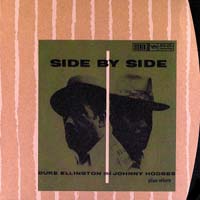 1959Side by Side