

The evolution of Rick Wakeman in Visions
Visions- Album Overview
Released in 1995, "Visions" is a significant entry in Rick Wakeman's extensive discography, marking a notable phase in the legendary keyboardist's career. The album, produced by Wakeman himself, showcases his prowess not only as a musician but also as a composer and producer. Released under the label, "Curry," "Visions" features a blend of progressive rock, orchestral, and ambient elements, highlighting Wakeman's classical influences and his signature keyboard work.
The recording process took place during a period when Wakeman was exploring new musical territories, incorporating a range of synthesizers, pianos, and orchestral arrangements. Collaborators on the album include guitarist Trevor Rabin and drummer Tony Fernandez, both of whom contributed to the rich soundscape and depth of the tracks. The album consists of several compositions that take listeners on a journey through various musical landscapes, reflecting Wakeman's ability to fuse rock with classical motifs.
Notable tracks include "The Journey," which encapsulates the album's theme of exploration and self-discovery. While "Visions" did not produce hits in the conventional pop sense, its artistic merit has been celebrated among progressive rock enthusiasts and showcases Wakeman's evolving style during the mid-90s. The album's significance lies in its reflection of a musician who, despite decades in the industry, continues to innovate and push boundaries, making "Visions" a noteworthy addition to his legacy.
Review
"Visions" is a testament to Rick Wakeman's enduring artistry and his ability to evolve with the times while remaining true to his progressive rock roots. The album's sound is characterized by lush synth layers and intricate keyboard passages that demonstrate Wakeman's technical skill. The musicality on display feels both intimate and expansive, with tracks that range from reflective and atmospheric to grand and ambitious.
While the lyrics are often minimal, the emotive instrumentals convey a narrative that resonates deeply with the listener. The artistic vision behind "Visions" is clear: it is an exploration of inner landscapes, a sonic representation of emotion and thought. The production quality is high, reflecting the advancements in technology in the 90s, yet it retains a classic feel that longtime fans of Wakeman will appreciate.
Overall, "Visions" is a well-crafted album that captures the essence of Rick Wakeman's musical journey while inviting listeners to experience a world of sound that is both familiar and fresh.
Highlights
- Intricate and masterful keyboard work throughout the album.
- Rich orchestral arrangements that enhance the listening experience.
- A reflective and immersive sound that encourages deep listening.
Weak points
- Lack of mainstream singles may limit its appeal to a wider audience.
- Some tracks may feel overly lengthy or indulgent for casual listeners.
- Minimal lyrics can lead to less engagement for those who prefer lyrical content.
Overall evaluation
"Visions" is a compelling album that showcases Rick Wakeman's continued evolution as an artist. While it may not cater to all audiences, its depth and creativity make it a significant work for fans of progressive rock and those who appreciate intricate musical compositions.
Personal rating: 7.5/10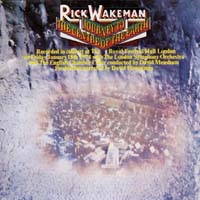 1974Journey to the Centre of the Earth
 1973The Six Wives of Henry VIII