
Ludwig Van Beethoven raises the bar with Symphony No.9 In D Minor Op.125, Furtwangler Bayre
Symphony No.9 In D Minor Op.125, Furtwangler Bayre- Album Overview
Ludwig Van Beethoven's Symphony No. 9 in D minor, Op. 125, is widely regarded as one of the composer’s most significant works and a cornerstone of the Western classical canon. The version conducted by Wilhelm Furtwängler, recorded in 1951 with the Bayreuth Festival Orchestra, showcases Beethoven's innovative spirit in a live setting. This particular recording, released by Deutsche Grammophon, stands out for its powerful interpretation and the emotional depth that Furtwängler brings to the score. The Ninth Symphony, which famously incorporates the “Ode to Joy” choral finale, was completed in 1824 and is celebrated not only for its musical complexity but also for its profound message of universal brotherhood and joy. Furtwängler, known for his interpretive depth, captures the symphony's grand arc, emphasizing the contrasts between the dark, brooding first movement and the triumphant conclusion. The recording features prominent soloists including soprano Anna Moffo, mezzo-soprano Christa Ludwig, tenor Richard Lewis, and bass-baritone Paul Schöffler, each adding their unique artistry to the performance. The album is a testament to the post-war cultural revival in Germany, reflecting a deep yearning for unity and hope in a divided world. The interplay of orchestral and vocal forces creates a thrilling experience for listeners, marking this recording as a benchmark in the interpretation of Beethoven's works.
Review
Furtwängler's interpretation of Beethoven's Ninth Symphony is an audacious and heartfelt endeavor. The recording opens with a turbulent first movement that sets the tone for the emotional journey ahead. The orchestration is rich and dynamic, with Furtwängler deftly navigating the symphony's contrasting themes. The slow movement is particularly poignant, filled with a sense of yearning and introspection, while the final movement bursts forth with exuberance and a sense of collective triumph. The choral finale is, of course, the centerpiece, and the synergy between the orchestra and the vocalists is electric, bringing the famous “Ode to Joy” to life in a way that feels both timeless and urgent. Furtwängler’s pacing is deliberate, allowing the audience to fully absorb the symphony’s emotional weight, yet propelling it forward with an undeniable momentum. This recording not only honors Beethoven’s legacy but also serves as a reminder of the power of music to transcend barriers and connect humanity.
Highlights
- Stunning orchestral dynamics that enhance the emotional depth of the work.
- Exceptional vocal performances that breathe life into the choral finale.
- Furtwängler’s masterful interpretation that balances tradition and personal expression.
Weak points
- Some may find the pacing of the first movement overly deliberate.
- Occasional recording artifacts may distract from the overall experience.
- The live recording may lack the polish of studio-produced alternatives.
Overall evaluation
Furtwängler's recording of Beethoven's Ninth Symphony captures the essence of the work's grandeur and emotional resonance. While it may have minor drawbacks typical of live recordings, the artistic vision and powerful performances make it a must-listen for any classical music enthusiast.
Personal rating: 9/10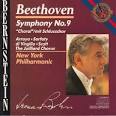 1972Symphony No. 9