
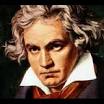
Christus Am Ölberg Chorphantasie: discovering Ludwig Van Beethoven's artistry
Christus Am Ölberg Chorphantasie- Album Overview
"Christus Am Ölberg Chorphantasie," composed by Ludwig Van Beethoven in 1803, is a remarkable work that showcases the composer’s deep religious conviction and his mastery of choral music. This chorphantasie, or choral fantasy, is based on the biblical scene of Christ in the Garden of Gethsemane, reflecting Beethoven's exploration of themes such as suffering, redemption, and the human experience. The piece was commissioned for a performance at the Theater an der Wien, where it debuted on March 5, 1803, under the direction of Beethoven himself.
The work is structured for soloists, choir, and orchestra, blending elements of symphonic and operatic styles. It features parts for a soprano, tenor, and bass, emphasizing the emotional weight of the text. The piece was released under various labels over the years, with significant recordings by major orchestras and conductors contributing to its legacy. Collaborators such as the famous tenor Ludwig Fischer and the Vienna Philharmonic have brought this work to life in different interpretations, further solidifying its place in classical repertoire.
Despite being less known than Beethoven's symphonies, "Christus Am Ölberg" reflects a transitional phase in Beethoven's compositional style, leading toward his later choral works, including the monumental Ninth Symphony. Its significance lies not only in its thematic depth but also in its technical innovation, paving the way for future generations of composers. The album continues to be a vital part of choral and orchestral performances today, highlighting Beethoven’s enduring influence on music.
Review
The sound of "Christus Am Ölberg Chorphantasie" is a tapestry of rich harmonies and emotional intensity. Beethoven's ability to merge orchestral textures with choral elements creates a powerful listening experience. The opening is marked by a sense of urgency, setting the tone for the introspective journey that follows. The lyrical passages for the soloists are beautifully crafted, allowing for expressive interpretation, while the choir's harmonies swell with grandeur, reflecting the tumultuous emotions of the narrative.
Lyrically, the work draws from the biblical text, imbuing it with a spiritual gravitas that resonates with listeners. Beethoven's artistic vision shines through in the way he captures the essence of despair and hope, portraying Christ's solitude with poignant clarity. The balance between the orchestral accompaniment and vocal lines is masterfully handled, showcasing Beethoven's innovative approach to composition. Overall, the piece serves as a testament to Beethoven's genius as he navigates complex emotional landscapes with both sensitivity and strength.
Highlights
- Rich orchestration that enhances the emotional depth of the narrative.
- Powerful choral writing that showcases Beethoven’s innovative style.
- Expressive solo vocal lines that draw the listener into the story.
Weak points
- Less recognition compared to Beethoven's more famous works, which may limit its exposure.
- The length of the piece may challenge listeners unfamiliar with choral works.
- Some may find the thematic material less accessible than Beethoven's instrumental compositions.
Overall evaluation
"Christus Am Ölberg Chorphantasie" is a profound exploration of faith and emotion, revealing the depths of Beethoven's artistry. It may not be as widely celebrated as his symphonies, but it is a vital work that deserves recognition for its innovation and emotional impact.
Personal rating: 8/10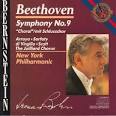 1972Symphony No. 9