ALBUM NOTESAlbum spotlight: Edvard Grieg – Symphony
Symphony- Album Overview
Edvard Grieg's Symphony in C minor, composed in 1864, is one of the few orchestral works completed by the celebrated Norwegian composer, who is primarily known for his piano compositions and chamber music. The Symphony was written during a period when Grieg was also heavily influenced by the burgeoning nationalist movement in Norway, which sought to elevate Norwegian culture following centuries of Danish and Swedish rule. The work was premiered in 1888, long after its composition, by the Bergen Philharmonic Orchestra, of which Grieg was a member in his early years.
The Symphony was initially met with mixed reviews, as its Romantic style diverged from the prevailing trends of the time, which leaned towards more radical innovation in orchestration and form. Grieg's orchestration of this piece demonstrates his affinity for lush harmonies and folk-inspired melodies, hallmarks of his style that would later emerge more prominently in works like "Peer Gynt." The Symphony is structured in four movements, showcasing Grieg's mastery of orchestral texture and thematic development.
Despite its relatively late recognition, the Symphony has gained importance in the classical repertoire, presenting a vivid portrait of Grieg's artistic vision. The album has been released under various labels, with notable recordings appearing on labels such as Deutsche Grammophon and Chandos. Collaborators on various recordings have included renowned conductors like Edward Gardner and orchestras such as the Oslo Philharmonic.
The Symphony remains significant not only for its musical content but also as a cultural artifact, reflecting the growing sense of national identity in Norway during the late 19th century, making it a vital work in the canon of Scandinavian classical music.
Review
Grieg's Symphony in C minor offers a rich tapestry of sound that evokes the landscapes and folk traditions of Norway. The orchestration is both vibrant and dynamic, allowing each section of the orchestra to shine. The first movement opens with a bold theme, characterized by a dramatic intensity that sets the tone for the entire symphony. Grieg's use of rhythm and melodic motifs draws the listener into a world that feels both familiar and uniquely Norwegian.
The slower second movement, marked Andante, reveals Grieg's lyrical gifts, showcasing an emotional depth that resonates with the listener. This movement is often considered a highlight due to its haunting beauty and intricate woodwind passages. The Scherzo, with its lively rhythms and playful themes, contrasts sharply with the preceding movements, displaying Grieg’s ability to navigate different moods and styles within a cohesive framework. Finally, the concluding Allegro energico brings the symphony to a triumphant close, integrating themes from earlier movements and leaving the audience uplifted.
While the Symphony may not have the same level of recognition as other Romantic works, it stands as a testament to Grieg's unique voice. His ability to blend folk elements with classical form results in a composition that is both innovative and deeply rooted in Norwegian culture. The recording quality in modern interpretations continually highlights the nuances of Grieg's orchestration, allowing contemporary listeners to appreciate the symphony's rich textures fully.
Highlights
- Rich orchestration that showcases Grieg’s mastery of the symphonic form.
- Emotional depth in the lyrical second movement.
- Strong representation of Norwegian cultural identity through music.
Weak points
- May lack the radical innovation found in contemporaneous works of the time.
- Initial mixed reviews may deter some listeners from giving it a chance.
- Less recognizable than Grieg's other compositions, such as "Piano Concerto in A minor."
Overall evaluation
Edvard Grieg's Symphony in C minor is a remarkable work that, while sometimes overshadowed by his more popular pieces, deserves a place in the classical repertoire. Its blend of folk influences and Romantic sensibility creates a uniquely evocative listening experience.
Personal rating: 8/10

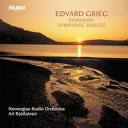
 1993Grieg: Peer Gynt Suites, Holberg Suite / Sibelius:
 1990Violin Sonatas
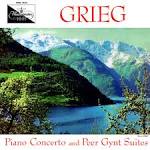 1965Peer Gynt