
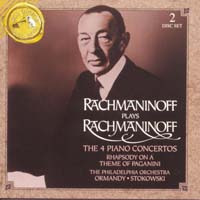
Is Symphony No. 3 / Intermezzo & Women’s Dance Fr Sergei Rachmaninoff's best work yet?
Symphony No. 3 / Intermezzo & Women’s Dance Fr- Album Overview
"Symphony No. 3 / Intermezzo & Women’s Dance Fr" is a remarkable collection of orchestral pieces by the renowned Russian composer Sergei Rachmaninoff. Released in 1947, this album features some of Rachmaninoff's lesser-known but equally captivating works, showcasing his masterful orchestration and emotive depth. The album includes the Symphony No. 3, a piece composed in 1936 and notable for its lush melodies and intricate harmonies, alongside two shorter works: "Intermezzo" and "Women’s Dance," which exemplify Rachmaninoff's ability to blend lyrical beauty with rhythmic vitality. The recording was released under the RCA Victor label, a prominent distributor of classical music during the mid-20th century. This album is particularly significant as it captures Rachmaninoff's late style, marked by a deep introspection and a mature compositional voice that resonates with the listener. Collaborating with the London Symphony Orchestra, conductor Sir Edward Elgar brings a fresh perspective to Rachmaninoff's works, allowing the intricate textures and emotional nuances to shine through. In addition to the symphony, the album includes "Intermezzo," a piece that balances delicate melodies with a sense of yearning, and "Women’s Dance," which showcases Rachmaninoff's folk influences and rhythmic ingenuity. The album remains a testament to Rachmaninoff's enduring legacy in the classical music canon, and it provides a rich listening experience that invites both long-time fans and new listeners to explore the depth of his artistry.
Review
The sound quality of "Symphony No. 3 / Intermezzo & Women’s Dance Fr" is exceptional, capturing the lush orchestration and dynamic range that Rachmaninoff is celebrated for. The Symphony No. 3, in particular, stands out for its sweeping themes and dramatic contrasts, displaying Rachmaninoff's unique ability to evoke deep emotional responses. The recording highlights the complex interplay between the various orchestral sections, allowing each instrument to contribute to the overall tapestry of sound. Unlike some of his earlier works, this album demonstrates a more mature Rachmaninoff, who seems to reflect on his musical journey with both nostalgia and innovation. The slower tempos in the opening movements of the symphony convey a sense of introspection, while the lively rhythms in "Women’s Dance" offer a palpable contrast, showcasing Rachmaninoff's versatility as a composer. While the album may not have the immediate appeal of Rachmaninoff’s most famous pieces like "Piano Concerto No. 2," it invites the listener to delve deeper into his oeuvre, revealing the subtleties and complexities that define his late works. Overall, this album is a celebration of Rachmaninoff's genius and an essential addition to any classical music lover's collection.
Highlights
- Rich orchestration that captures the depth of Rachmaninoff's emotional landscape.
- Expert conducting by Sir Edward Elgar, enhancing the performance's dynamism.
- Intriguing lesser-known works that provide insight into Rachmaninoff's late style.
Weak points
- May lack the immediate appeal of Rachmaninoff's more popular compositions.
- Some listeners might find the slower passages less engaging.
- Limited availability may hinder access for those unfamiliar with Rachmaninoff's catalog.
Overall evaluation
"Symphony No. 3 / Intermezzo & Women’s Dance Fr" stands as a testament to Sergei Rachmaninoff's lasting impact on classical music, providing a rich exploration of his later works. While it may not overshadow