

The evolution of Paco de Lucía in Castillo de arena
Castillo de arena- Album Overview
"Castillo de arena," released in 1990, is a pivotal album in the discography of Spanish flamenco guitarist and composer Paco de Lucía. This album, released under the label Deutsche Grammophon, marks a significant point in de Lucía's artistic journey, showcasing his evolution as a musician and his explorations beyond traditional flamenco. The recording took place in a period when de Lucía was beginning to incorporate more diverse influences into his work, blending classical, jazz, and world music elements with traditional flamenco.
The album features an array of talented collaborators, including the renowned flamenco singer Tomatito and percussionist Rubem Dantas, whose contributions enhance the album's intricate soundscapes. "Castillo de arena" includes tracks like "La Cañada," which exemplifies de Lucía’s virtuosic guitar playing and innovative compositions. The title track, "Castillo de arena," stands out as a reflective piece, illustrating the lyrical and emotional depth that de Lucía often infused into his music.
The cultural significance of "Castillo de arena" cannot be overstated; it represents a bridge between traditional flamenco and contemporary musical expressions, capturing a moment when de Lucía was not just a guitarist but a global ambassador for Spanish music. This album expanded the audience for flamenco music, bringing it to new heights and inspiring a generation of musicians worldwide. Singles from the album received critical acclaim, further solidifying de Lucía's status as a legend in the world music scene.
Review
The sound of "Castillo de arena" is a beautiful tapestry of rhythm and melody, woven together by de Lucía's masterful guitar work. His technical prowess is evident throughout the album, yet it is his ability to convey deep emotion that truly captivates listeners. The lyrical themes often reflect introspection and nostalgia, characteristic of de Lucía's style, which invites listeners into a world of personal reflection. The arrangements are both intricate and accessible, making the album a perfect entry point for those new to flamenco while still offering depth for seasoned aficionados.
Artistically, de Lucía's vision in "Castillo de arena" is one of evolution and exploration. He pushes the boundaries of what flamenco can be, integrating influences that transcend cultural barriers. This album is a testament to his genius, as he deftly balances tradition with innovation, creating a sound that is uniquely his own. The interplay between guitar and voice, particularly in tracks featuring Tomatito, is both haunting and exhilarating, showcasing a rare chemistry that elevates the music.
Highlights
- Exceptional guitar work that blends traditional flamenco with modern influences.
- Emotionally resonant compositions that invite deep reflection.
- Powerful collaborations with talented musicians, enhancing the overall sound.
Weak points
- Some listeners may find the experimental elements diverge too far from traditional flamenco.
- The album's introspective nature may not appeal to those seeking more upbeat tracks.
- Limited promotion may have hindered its reach compared to de Lucía's earlier works.
Overall evaluation
"Castillo de arena" is a remarkable showcase of Paco de Lucía's artistry, illustrating his evolution while honoring his roots. It stands as a significant contribution to the flamenco genre and world music as a whole.
Personal rating: 9/10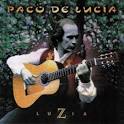 1998Luzia
 1990Zyryab