ALBUM NOTESTill Eulenspiegel / Don Juan / Tod Und Verklärung: exploring the world of Richard Strauss
Till Eulenspiegel / Don Juan / Tod Und Verklärung - Album Overview
Richard Strauss's orchestral works have long been celebrated for their lush orchestration and evocative storytelling. The album "Till Eulenspiegel / Don Juan / Tod Und Verklärung," released in 1985 under the Deutsche Grammophon label, showcases some of the composer’s most significant pieces, highlighting his mastery in programmatic music. The recording features the acclaimed Berlin Philharmonic, conducted by Herbert von Karajan, a prominent advocate for Strauss's music.
This album includes three major orchestral works: "Till Eulenspiegel's Lustige Streiche," "Don Juan," and "Tod und Verklärung." Each piece reflects Strauss's unique ability to blend rich melodies with intricate harmonies, painting vivid musical narratives. "Till Eulenspiegel," inspired by the legendary German folk hero, captures the spirit of mischief and playfulness through its dynamic orchestral textures. "Don Juan," a tone poem, explores themes of love and lust, presenting a more intense emotional landscape. Finally, "Tod und Verklärung" delves into existential themes, depicting the transition from life to death.
The recording was notable for its technical quality and the precision of the Berlin Philharmonic, bringing Strauss's intricate scores to life. Karajan's interpretation is both passionate and meticulously detailed, reflecting a deep understanding of the composer’s intent. This album not only serves as an introduction to Strauss's orchestral style but also stands as a significant contribution to classical music recordings in the 20th century, capturing the essence of Strauss's genius.
Review
The album opens with "Till Eulenspiegel," a vibrant celebration of the trickster’s antics, characterized by its playful motifs and whimsical orchestration. The Berlin Philharmonic delivers an electrifying performance, with each section of the orchestra contributing to the lively dialogue between instruments. Karajan’s direction ensures that the nuances of Strauss’s writing are fully realized, allowing the listener to appreciate the intricate counterpoint and thematic development.
Following this, "Don Juan" presents a stark contrast with its passionate and dramatic narrative. The orchestral forces swell to convey the tumultuous emotions of the eponymous character, and the Berlin Philharmonic rises to the occasion, delivering a performance that is both powerful and lyrical. Karajan captures the essence of longing and desire, pulling the listener into the tumult of Don Juan’s escapades.
The album closes with "Tod und Verklärung," a profound meditation on life and death. The expansive orchestral palette evokes a sense of longing and reflection, culminating in a transcendental climax that remains hauntingly beautiful. The emotional depth of this piece is expertly conveyed through the orchestra, demonstrating Strauss's ability to evoke complex feelings through music.
Highlights
- Rich orchestration that showcases the Berlin Philharmonic's talent.
- Herbert von Karajan's insightful interpretation enhances Strauss's narratives.
- Variety of emotional landscapes captured across the three works.
Weak points
- Some listeners may find the interpretations too romanticized compared to other conductors.
- Absence of a conductor's personal touch in certain passages may detract from the experience.
- The recording, while excellent, may feel dated compared to modern productions.
Overall evaluation
"Till Eulenspiegel / Don Juan / Tod Und Verklärung" stands as a significant representation of Richard Strauss's orchestral mastery. With the Berlin Philharmonic under the baton of Herbert von Karajan, this album is a compelling exploration of Strauss's thematic richness and orchestral brilliance. While there are minor drawbacks, the overall experience is a celebration of one of classical music's great composers.
Personal rating: 8/10

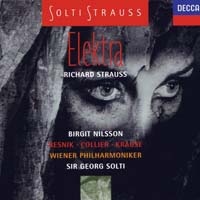 1986Elektra
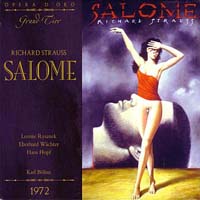 1978Salome