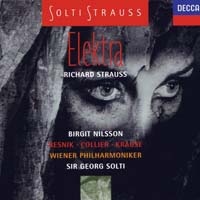
ALBUM NOTESReview of Richard Strauss – Elektra
Elektra- Album Overview
Richard Strauss's opera "Elektra," first premiered in 1909, is a seminal work in the early 20th-century operatic repertoire. The opera is based on the ancient Greek myth of Electra, focusing on her quest for vengeance against her mother, Clytemnestra, for the murder of her father, Agamemnon. The composition is notable for its intense emotional expression and innovative orchestration, which has influenced many composers in the modern era.
The opera was composed for a large orchestra, featuring complex harmonies and intricate textures that create a haunting atmosphere. "Elektra" was released under various recordings, with notable versions including the 1953 recording featuring Maria Callas and the 1997 Deutsche Grammophon recording with the Vienna Philharmonic, conducted by Christoph von Dohnányi. The album showcases a stellar cast, including the powerful performances of the lead soprano, who embodies Elektra's fury and despair.
Culturally, "Elektra" has had a profound impact, often being seen as a precursor to the expressionist movement in music and drama. Its themes of revenge, madness, and familial conflict resonate deeply within the human experience. The opera has inspired countless adaptations and interpretations across various artistic mediums.
Review
"Elektra" stands out for its visceral soundscape and emotional depth. Strauss's score is a breathtaking fusion of dissonance and lyrical beauty, drawing listeners into the psychological turmoil of the characters. The music is both challenging and rewarding, encapsulating Elektra's obsessive drive for revenge against her mother's betrayal.
The libretto, based on Hugo von Hofmannsthal's adaptation of Sophocles's play, enhances the opera's dramatic intensity. The characters are vividly portrayed, with Elektra's role as a tortured heroine resonating powerfully through Strauss's music. The orchestration is intricate and bold, blending traditional operatic elements with a modern sensibility that pushes the boundaries of the genre.
The production values in recent recordings are exceptional, with clear sound quality that allows the nuances of Strauss's orchestration to shine. The emotional weight of the opera is palpable, making "Elektra" a compelling experience that captivates audiences.
Highlights
- Striking orchestration that elevates the emotional intensity of the narrative.
- Powerful vocal performances, particularly in the role of Elektra.
- Rich historical and cultural significance, marking a pivotal point in operatic history.
Weak points
- The complex score may be challenging for some listeners to appreciate fully.
- The intense themes may not resonate with all audiences.
- Some productions may lack the dramatic flair needed to convey the opera's depth.
Overall evaluation
"Elektra" is a powerful and evocative opera that showcases Richard Strauss's genius as a composer. Its emotional depth and innovative orchestration make it a significant work in the operatic canon. While it may present challenges to some, its rewards are profound for those willing to engage with its complexities.
Personal rating: 9/10

 1988Daphne
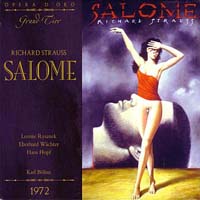 1978Salome