ALBUM NOTESDon Quixote: the story Richard Strauss wants to tell
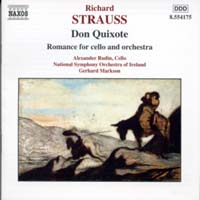
Don Quixote- Album Overview
Richard Strauss's "Don Quixote," officially titled "Don Quixote, Op. 35," is a symphonic poem that premiered in 1898, making it a cornerstone of late Romantic orchestral literature. This work was inspired by Miguel de Cervantes's classic novel, which tells the tale of an aging nobleman who becomes a delusional knight, embarking on a quest filled with adventure and folly. The piece is characterized by its rich orchestration and intricate thematic development, reflecting the complex emotional landscape of its protagonist.
The composition is structured in variations, presenting the character of Don Quixote through the cello, while his faithful squire Sancho Panza is depicted by the viola. Strauss's innovative approach to instrumentation and thematic transformation allows listeners to journey alongside Quixote, experiencing his dreams, ideals, and ultimate disillusionment. Recorded by various prestigious orchestras, the most notable recordings include those by the Vienna Philharmonic and the Berlin Philharmonic, showcasing the versatility and interpretative depth of the piece.
The cultural significance of "Don Quixote" lies not only in its musical innovation but also in its exploration of themes such as idealism versus realism, the nature of heroism, and the human condition, making it a timeless reflection on society and individual aspiration. The work has been recorded numerous times and remains a staple in the concert repertoire, often serving as a vehicle for soloists to display their virtuosity and interpretative skills.
Review
Strauss's "Don Quixote" is a lush, evocative orchestral journey that beautifully marries the themes of Cervantes's narrative with the intricacies of orchestral sound. The work opens with a gentle yet haunting introduction, setting the stage for the character of Don Quixote, whose musical representation is both poignant and grand. The cello's soaring lines capture the essence of Quixote's dreams and ideals, while the contrasting timbres of the viola bring Sancho Panza's humorous pragmatism to life.
The variations progress through moments of intense drama and whimsicality, reflecting the duality of Quixote's character — the noble knight who ultimately faces the absurdity of his quest. Strauss's masterful orchestration allows for a wide palette of emotions, from the delicate and introspective to the bombastic and thrilling. The interplay between the soloists and the orchestra creates a dynamic dialogue that keeps the listener engaged throughout the experience.
While the piece is predominantly instrumental, its emotional depth transcends the absence of lyrics, conveying a narrative that is deeply felt rather than explicitly stated. Strauss's artistic vision in "Don Quixote" is a testament to the power of music to evoke storytelling and emotional resonance, making it a profound exploration of the human spirit.
Highlights
- Rich orchestral texture that captures the essence of Cervantes's narrative.
- Innovative use of instruments to represent the characters of Don Quixote and Sancho Panza.
- Emotional depth that resonates with listeners, transcending the need for lyrics.
Weak points
- The complexity of the work may be challenging for casual listeners unfamiliar with orchestral music.
- Some interpretations can feel overly dramatic, potentially overshadowing the nuanced storytelling.
- Length may deter some audiences who prefer shorter, more concise compositions.
Overall evaluation
Strauss's "Don Quixote" stands as a monumental achievement in orchestral literature, offering a rich tapestry of sound that captures the spirit of Cervantes's timeless tale. Its blend of humor and pathos creates a compelling listening experience that continues to resonate with audiences today.
Personal rating: 9/10

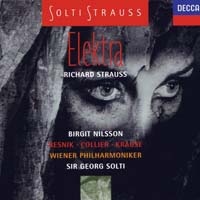 1986Elektra
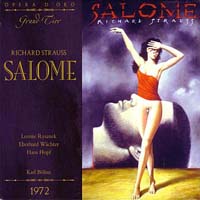 1978Salome