ALBUM NOTESUnpacking Richard Strauss's Ariadne Auf Naxos
Ariadne Auf Naxos- Album Overview
Richard Strauss's "Ariadne Auf Naxos," premiered in 1916, is a unique operatic work that blends a comedic play with a serious opera, showcasing the composer’s innovative approach to music and drama. The opera is a fascinating exploration of art and its purpose, presenting the story of Ariadne, abandoned by Theseus, who waits for death until she encounters Bacchus. Strauss's score combines lush orchestration with intricate vocal lines, reflecting both the characters' emotional depths and the comedic elements of the prologue. The original production was commissioned by the Vienna State Opera but encountered challenges that led to its eventual adaptation.
The album, released by Deutsche Grammophon in various iterations, features renowned performers and conductors over the years, with notable recordings including those with the Vienna Philharmonic and the Berlin Philharmonic. Collaborators often include celebrated sopranos and tenors who bring the complex characters to life. The opera's significance extends beyond its musical brilliance; it represents a key moment in early 20th-century music where Strauss defied traditional operatic norms. "Ariadne Auf Naxos" has been praised for its rich thematic content and its ability to intertwine comedy with profound existential questions. The operatic landscape is forever altered by this work, making it a cornerstone of contemporary opera repertoire.
Review
"Ariadne Auf Naxos" is a stunning amalgamation of musical genius and narrative depth. The score is replete with Strauss's characteristic lush harmonies and vibrant orchestration, which are seamlessly integrated with the vocal lines. The opera's dual nature, a comedic prologue followed by a tragic opera, allows for a dynamic exploration of themes such as love, abandonment, and the reconciliation of art with reality. The characters are richly drawn, particularly Ariadne, whose poignant arias express deep longing and despair, contrasted sharply with the playful antics of the Commedia dell'arte troupe.
The vocal performances are often the highlight, with sopranos taking on the demanding role of Ariadne showcasing both technical prowess and emotional depth. The orchestral accompaniment, under the baton of skilled conductors, enhances the drama, making each moment resonate with urgency and beauty. Strauss’s ability to blend humor with pathos serves to elevate the work beyond mere entertainment, challenging the audience to contemplate the nature of art itself. Overall, "Ariadne Auf Naxos" stands as a testament to Strauss’s vision and innovation in the operatic form.
Highlights
- Rich and lush orchestration that enhances the emotional depth of the narrative.
- Strong vocal performances, particularly by sopranos in the role of Ariadne.
- Innovative structure that blends comedy with tragedy, providing a unique operatic experience.
Weak points
- The dual structure may confuse some listeners unfamiliar with operatic conventions.
- Some comedic elements might feel out of place to those expecting a traditional tragic opera.
- The length of the opera can be daunting, potentially challenging audience engagement.
Overall evaluation
Overall, "Ariadne Auf Naxos" is a masterful work that showcases Strauss’s brilliance in melding various musical styles and themes. Its exploration of art and meaning within the operatic framework makes it a significant work in the classical canon.
Personal rating: 9/10

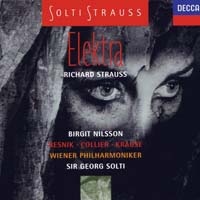 1986Elektra
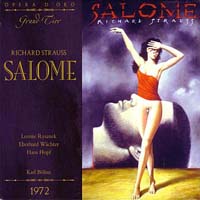 1978Salome