ALBUM NOTESListening guide: Richard Strauss's Strauss: Till Eulenspiegel / Grieg: Peer Gynt / Tc
Strauss: Till Eulenspiegel / Grieg: Peer Gynt / Tc- Album Overview
Richard Strauss's "Till Eulenspiegel / Grieg: Peer Gynt / Tc" is a fascinating orchestral album that showcases the brilliance of Strauss's tone poems alongside Edvard Grieg's beloved suites from "Peer Gynt." Released in 1995 under the Deutsche Grammophon label, this album features the renowned Berliner Philharmoniker, conducted by the esteemed Herbert von Karajan. The recording captures a vibrant interpretation of both works, with a special focus on Strauss's "Till Eulenspiegel's Merry Pranks," a piece that exemplifies the composer’s innovative orchestration and narrative flair.
The album comprises three main tracks: Strauss's "Till Eulenspiegel," Grieg's "Peer Gynt: Suite No. 1," and "Peer Gynt: Suite No. 2." Each piece reflects the composers' unique storytelling abilities through orchestral music, with Strauss's work drawing from German folk tales and Grieg's compositions providing a rich Scandinavian backdrop. The recording sessions took place in the 1990s, a period marked by a resurgence of interest in Strauss's compositions, and von Karajan's leadership adds a layer of authenticity and depth to the performance.
The album stands as an important cultural artifact, bridging the Romantic era's emotional depth with the modern orchestra's technical prowess. It not only highlights the virtuosity of the Berliner Philharmoniker but also contributes to the ongoing appreciation of both Strauss and Grieg's legacies in classical music. The album has garnered attention for its lush sound quality and dynamic interpretations, making it a significant addition to any classical music collection.
Review
This album serves as a masterclass in orchestral storytelling, presenting Strauss's "Till Eulenspiegel" with a vibrant and playful energy that captures the essence of the mischievous character it portrays. The Berliner Philharmoniker, under von Karajan's baton, delivers a performance that is both technically precise and emotionally engaging. The clarity of the recording allows listeners to appreciate the intricate interplay of instruments, showcasing Strauss's inventive orchestration.
In contrast, Grieg's "Peer Gynt" suites offer a more lyrical and melodic experience. The album’s transitions between the two composers are seamless, with Grieg's evocative themes and rich harmonies providing a perfect counterbalance to Strauss's more exuberant style. Von Karajan's interpretations bring out the drama in "In the Hall of the Mountain King" and the pastoral beauty of "Morning Mood," making these familiar pieces feel fresh and alive.
Overall, this album is a testament to the enduring power of orchestral music, demonstrating how these classic works can resonate with contemporary audiences while preserving their historical significance.
Highlights
- Exquisite orchestral sound and dynamic range.
- Masterful interpretation by Herbert von Karajan and the Berliner Philharmoniker.
- Seamless blending of Strauss's and Grieg's contrasting musical styles.
Weak points
- Some listeners may find Strauss's piece less accessible than Grieg's melodic compositions.
- The album may not include additional context or historical background for new listeners.
- A few moments in "Till Eulenspiegel" could feel overly theatrical for some tastes.
Overall evaluation
In conclusion, "Strauss: Till Eulenspiegel / Grieg: Peer Gynt / Tc" is a captivating orchestral album that skillfully showcases the talents of both Strauss and Grieg. It offers an engaging listening experience that is both rich in texture and full of narrative depth. The impeccable performance by the Berliner Philharmoniker under von Karajan's direction elevates these classic works, making it a worthwhile addition to any classical music library.
Personal rating: 9/10

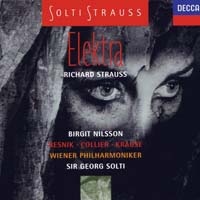 1986Elektra
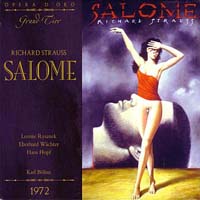 1978Salome