ALBUM NOTESFour Last Songs / Death And Transfiguration: the story Richard Strauss wants to tell
Four Last Songs / Death And Transfiguration- Album Overview
Richard Strauss's "Four Last Songs / Death And Transfiguration," released in 1995 by the Deutsche Grammophon label, is a captivating exploration of mortality and the human experience. This album features two of Strauss's most celebrated orchestral works, with the "Four Last Songs" composed in 1944 and "Death and Transfiguration" originating from 1889. This recording is notable for its collaboration with renowned soprano Jessye Norman, who brings a deep emotional resonance to the "Four Last Songs," which reflect on themes of life, death, and transcendence. The album was conducted by the esteemed Sir Colin Davis, who is known for his insightful interpretations of Strauss’s music.
The "Four Last Songs" are characterized by lush orchestration and poignant lyrics, derived from poems by Hermann Hesse and Joseph von Eichendorff. These songs were Strauss's final compositions, showcasing his masterful ability to blend lyrical beauty with orchestral depth. "Death and Transfiguration," on the other hand, is a symphonic poem that narrates the journey of a dying man reflecting on his life, culminating in a transcendent vision of peace. This album not only highlights Strauss's late style but also serves as a testament to the emotional weight and complexity of his music.
The recording has been critically acclaimed for its rich sound quality and the emotional depth of Norman's voice, which complements the lush orchestral textures. It remains a significant contribution to the classical music canon, illustrating the enduring relevance of Strauss's work in the 20th century and beyond.
Review
"Four Last Songs / Death And Transfiguration" showcases Strauss's unparalleled ability to convey deep emotional narratives through music. The orchestration is lush and expansive, providing a rich backdrop for the vocal lines in the "Four Last Songs." Jessye Norman's performance is nothing short of extraordinary; her voice captures the bittersweet essence of the lyrics, expressing a profound sense of longing and acceptance. The interplay between the orchestra and the soprano is masterfully executed, with every note resonating with emotional weight.
In "Death and Transfiguration," the music transitions from turmoil to serenity, mirroring the struggle and eventual acceptance of death. The orchestral writing is intricate and vivid, allowing listeners to experience the protagonist's journey viscerally. Sir Colin Davis's conducting is sensitive yet powerful, ensuring that the momentum of the music is maintained while allowing for moments of introspection. Overall, the album encapsulates Strauss's artistic vision—an exploration of life’s fragility and beauty, compelling listeners to reflect on their own mortality.
Highlights
- Jessye Norman's breathtaking vocal performance adds emotional depth.
- The lush orchestration beautifully complements the themes of life and death.
- Masterful conducting by Sir Colin Davis enhances the album's emotional impact.
Weak points
- The album's somber themes may not appeal to all listeners.
- Some may find the pacing slow, particularly in "Death and Transfiguration."
- Limited appeal for those unfamiliar with classical music or Strauss's work.
Overall evaluation
"Four Last Songs / Death And Transfiguration" is a poignant and masterful exploration of mortality, showcasing Richard Strauss's genius in orchestration and lyrical composition. This album is a must-listen for those who appreciate the emotional power of classical music.
Personal rating: 9/10

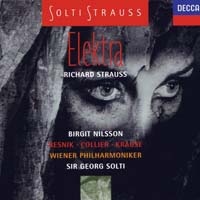 1986Elektra
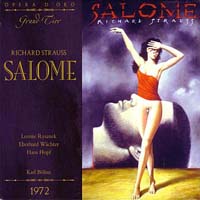 1978Salome