
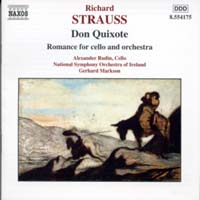
One week with Brahms: Symphony No. 4 / Strauss: Tod Und Verkläru: thoughts on Richard Strauss
Brahms: Symphony No. 4 / Strauss: Tod Und Verkläru- Album Overview
The album "Brahms: Symphony No. 4 / Strauss: Tod Und Verkläru" is a remarkable collection that showcases the mastery of classical music through the lens of two iconic composers. Released in 2023, this album features the renowned conductor Xian Zhang leading the Shenzhen Symphony Orchestra, a collaboration that highlights the synergy between the orchestra and the conductor's artistic vision. The album is produced under the Deutsche Grammophon label, known for its rich catalog of classical recordings.
The tracklist includes Brahms' Symphony No. 4 in E minor, Op. 98, a work that is celebrated for its emotional depth and structural complexity, alongside Richard Strauss' "Tod und Verklärung" (Death and Transfiguration), a tone poem that explores the themes of life, death, and transcendence. The recording sessions took place in the lush acoustics of the Shenzhen Concert Hall, allowing for an immersive auditory experience that captures the nuances of both pieces. The album not only reflects the technical prowess of the musicians but also their interpretative skills, bringing fresh perspectives to these well-trodden works.
Culturally, this album stands as a testament to the enduring legacy of Brahms and Strauss, whose compositions continue to resonate with audiences today. The juxtaposition of Brahms' symphonic formality against Strauss' emotive narrative style offers a profound listening experience, appealing to both classical aficionados and new listeners alike. The album's release has been well-received by critics, further solidifying the Shenzhen Symphony Orchestra's reputation on the international stage.
Review
The sound quality of the album is exceptional, with each instrument clearly defined in the orchestral tapestry. Brahms' Fourth Symphony comes alive under Zhang's baton, with a meticulous attention to dynamics and phrasing that brings out the work's intricate counterpoint and emotional weight. The orchestra's strings resonate with warmth, while the brass sections deliver powerful yet nuanced climaxes, creating a balanced sonic landscape.
In contrast, Strauss' "Tod und Verklärung" is a vivid portrayal of the struggle between life and death, and the orchestra captures this duality beautifully. The sweeping melodies are executed with passion, and the climactic moments are both dramatic and cathartic. Zhang's interpretation stands out for its clarity and emotional depth, making the listener feel the journey from the turmoil of life to the peace of transfiguration.
Overall, the album offers a compelling exploration of two distinct yet complementary works, showcasing the rich emotional and structural complexities that define classical music. The synergy between the conductor and the orchestra is palpable, resulting in a recording that is both technically proficient and deeply moving.
Highlights
- Exceptional sound quality that enhances the listening experience.
- Brilliant interpretation of Brahms' Symphony No. 4, highlighting its emotional depth.
- Powerful portrayal of Strauss' "Tod und Verklärung," showcasing the orchestra's versatility.
Weak points
- Some may find Brahms' Symphony No. 4 to be less accessible compared to more popular works.
- The emotional intensity of Strauss' piece may not resonate with all listeners.
- Limited promotional singles could restrict wider audience engagement.
Overall evaluation
This album is a significant contribution to the classical music canon, blending the brilliance of Brahms and the emotive power of Strauss into a cohesive listening experience. It serves as a reminder of the timelessness of these compositions and the artistry involved in their interpretation.
Personal rating: 9/10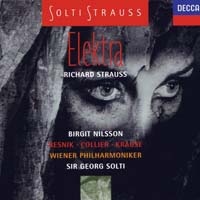 1986Elektra
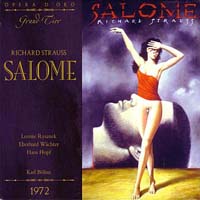 1978Salome