
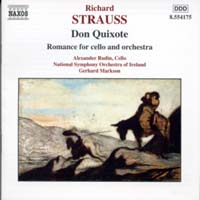
Exploring the sound of Richard Strauss: Also Sprach Zarathustra / Tod Und Verklärung
Also Sprach Zarathustra / Tod Und Verklärung- Album Overview
Released in 2012, the album "Also Sprach Zarathustra / Tod Und Verklärung" features two of Richard Strauss's most celebrated compositions, showcasing his mastery in orchestral writing. This particular recording is performed by the Berlin Philharmonic, conducted by the renowned maestro Herbert von Karajan, a pivotal figure in the classical music world known for his interpretative insights. The album was released under the Deutsche Grammophon label, a label that has a long-standing history of producing high-quality classical recordings.
“Also Sprach Zarathustra,” composed in 1896, is a tone poem inspired by Friedrich Nietzsche’s philosophical work of the same name. Its opening fanfare, famously used in Stanley Kubrick's film "2001: A Space Odyssey," has become iconic in popular culture. The piece explores themes of existentialism and the evolution of humanity through vivid orchestration and dynamic contrasts.
On the other hand, “Tod Und Verklärung” (Death and Transfiguration), composed in 1888, reflects Strauss's personal struggles and aspirations, weaving a narrative of life, death, and the transcendence of the human spirit. This work is characterized by its lush harmonies and intricate orchestral textures, demonstrating Strauss's ability to evoke deep emotions through music.
The collaboration between the Berlin Philharmonic and Karajan results in a powerful interpretation of these works, with each section of the orchestra contributing to the grand tapestry of sound. The album has been praised for its sonic clarity and emotional depth, making it a significant entry in the repertoire of Strauss's orchestral music.
Review
This recording of "Also Sprach Zarathustra" and "Tod Und Verklärung" serves as a brilliant showcase of Strauss's orchestral genius. The Berlin Philharmonic delivers a performance that is both technically flawless and emotionally resonant. Karajan's direction brings out the intricate layers of Strauss's compositions, highlighting the dynamic contrasts and rich textures inherent in the music.
The opening of "Also Sprach Zarathustra" is nothing short of breathtaking, with the iconic brass fanfare resonating powerfully. The orchestra's precision and depth allow the listener to experience the philosophical journey that Strauss intended. Similarly, "Tod Und Verklärung" unfolds with an ethereal quality; the poignant melodies and harmonies convey a profound sense of longing and resolution, encapsulating the essence of life's fleeting nature.
While the recording celebrates the grandeur of Strauss's orchestration, it also invites listeners to reflect on the underlying themes of existence, death, and rebirth. The emotional weight carried through each movement makes this album not just a collection of orchestral works but a profound exploration of the human experience.
Highlights
- Exceptional orchestral performance by the Berlin Philharmonic.
- Dynamic and emotive conducting by Herbert von Karajan.
- Rich sound quality and clarity in the recording.
Weak points
- Some listeners may find the interpretations to be traditional rather than innovative.
- The album may not appeal to those unfamiliar with classical music.
- Limited additional context or liner notes for deeper understanding of the works.
Overall evaluation
"Also Sprach Zarathustra / Tod Und Verklärung" is a compelling representation of Richard Strauss's orchestral mastery, brought to life by one of the world's leading orchestras under the baton of Herbert von Karajan. This recording is a must-have for any classical music enthusiast or those seeking to explore the profound emotional landscapes of Strauss's work.
Personal rating: 9/10 1986Elektra
 1978Salome