ALBUM NOTESFrom intro to finale: what Also Sprach Zarathustra / Ein Heldenleben delivers
Also Sprach Zarathustra / Ein Heldenleben- Album Overview
Richard Strauss's "Also Sprach Zarathustra" and "Ein Heldenleben," two of his most celebrated orchestral works, were released together on various recordings, with notable interpretations emerging in the 20th century. Originally composed in 1896, "Also Sprach Zarathustra" (Thus Spoke Zarathustra) was inspired by Friedrich Nietzsche's philosophical novel of the same name. The piece gained immense popularity following its use in Stanley Kubrick's 1968 film "2001: A Space Odyssey," which showcased Strauss's grand and evocative soundscapes. The work is structured in nine sections, starting with the iconic "Sunrise," characterized by its powerful brass and sweeping strings, creating an atmosphere of wonder and enlightenment.
"Ein Heldenleben" (A Hero's Life), composed in 1898, is a symphonic poem that serves as a semi-autobiographical portrayal of Strauss's own life and artistic journey. This work is notable for its lush orchestration and complex themes, blending personal narrative with broader cultural reflections. Both pieces showcase Strauss's ability to convey deep emotion and philosophical ideas through orchestral music, making them significant contributions to the late-Romantic repertoire.
Collaborators on various recordings include renowned conductors and orchestras, such as Herbert von Karajan with the Berlin Philharmonic and Leonard Bernstein with the Vienna Philharmonic. The recording label Deutsche Grammophon has been pivotal in preserving these masterpieces, releasing multiple acclaimed interpretations over the years. The cultural significance of these works extends beyond classical music, influencing popular culture, film, and contemporary art.
Review
Strauss's "Also Sprach Zarathustra" and "Ein Heldenleben" exemplify the grandeur and complexity of late-Romantic orchestral music. The opening "Sunrise" of "Also Sprach Zarathustra" is a masterclass in orchestration, with its brass fanfare and sweeping strings evoking a sense of cosmic wonder. The piece unfolds with a series of musical themes that reflect Nietzsche's philosophical ideas, from the triumph of the individual to the struggle against societal norms.
"Ein Heldenleben" takes the listener on an even more personal journey, with Strauss using the orchestra to create vivid characterizations, from the Hero to his Woman, and even a portrayal of critics. The lush harmonies and intricate counterpoint demonstrate Strauss's mastery of the orchestral form, while the thematic transformations capture the essence of a life lived passionately. The emotional weight of the music resonates deeply, offering a profound listening experience that invites reflection on the nature of heroism and identity.
Both works are rich in their exploration of existential themes, yet approachable for even the casual listener. Strauss crafts a sound world that is at once grand and intimate, making these compositions timeless.
Highlights
- Iconic themes that resonate with both classical and contemporary audiences.
- Masterful orchestration that showcases Strauss's genius in blending instruments.
- Philosophical depth that invites introspection and emotional engagement.
Weak points
- The complexity of the themes may be challenging for some listeners to fully grasp.
- Lengthy orchestral passages can feel overwhelming in certain interpretations.
- Repetitive motifs in "Ein Heldenleben" may detract from the overall impact for some audiences.
Overall evaluation
Overall, "Also Sprach Zarathustra / Ein Heldenleben" stands as a monumental achievement in orchestral music, marrying philosophical inquiry with rich musical expression. Strauss’s ability to evoke profound emotional responses through orchestration makes this album essential listening for both classical aficionados and newcomers alike.
Personal rating: 9/10

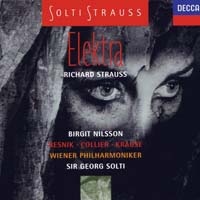 1986Elektra
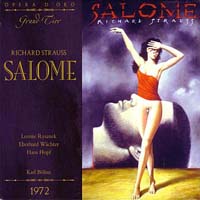 1978Salome