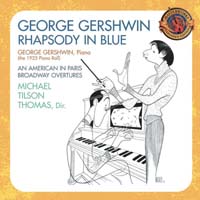
ALBUM NOTESGeorge Gershwin experiments boldly on Rhapsody In Blue / Piano Concerto In F / An Americ
Rhapsody In Blue / Piano Concerto In F / An Americ- Album Overview
George Gershwin's landmark compositions, "Rhapsody in Blue," "Piano Concerto in F," and "An American in Paris," represent a pivotal moment in the evolution of American classical music. Released in 1924 as part of the RCA Victor label's catalog, these works encapsulate Gershwin's innovative blend of jazz, classical, and popular music traditions. "Rhapsody in Blue" was originally commissioned by bandleader Paul Whiteman for a concert titled "An Experiment in Modern Music," and it premiered on February 12, 1924, to immediate acclaim. This piece, characterized by its sweeping melodies and rhythmic complexity, broke conventions of classical music while drawing from the improvisational spirit of jazz.
The "Piano Concerto in F," premiered in 1926, further solidified Gershwin's reputation as a trailblazer. This concerto features a vibrant orchestration that intertwines the piano with brass and woodwinds, showcasing the energy of American life in the 1920s. "An American in Paris," composed in 1928, is an orchestral tone poem that paints a vivid picture of a young American's experiences in Paris, infusing the score with authentic sounds of the city.
Gershwin collaborated with notable musicians and conductors, including Ferde Grofé, who arranged "Rhapsody in Blue" for the Paul Whiteman Orchestra. The album has resonated through generations, influencing countless artists and composers, and is celebrated for its cultural significance in representing the American spirit. Each track serves as both a musical narrative and a reflection of the era's cultural melting pot, solidifying Gershwin's legacy in the pantheon of American music.
Review
Gershwin's bold experimentation with "Rhapsody in Blue" showcases his genius in melding diverse musical styles. The opening clarinet glissando has become iconic, setting the stage for a piece that seamlessly transitions between jazz and classical sensibilities. The intricate piano work reveals Gershwin's virtuosic talent, while the orchestration captures the vibrancy of the Jazz Age. In the "Piano Concerto in F," Gershwin's compositional prowess shines through as he employs a lush orchestral palette, juxtaposing the piano's lyrical passages with lively orchestral interjections.
"An American in Paris" serves as a rich auditory landscape, with Gershwin's use of street sounds and motifs reflecting the bustling life of the city. The work is a testament to his ability to evoke imagery through music, demonstrating a keen understanding of cultural context. Overall, the album encapsulates Gershwin's artistic vision, bridging the divide between high art and popular music, while also resonating deeply with audiences across generations.
Highlights
- The innovative fusion of jazz and classical elements in "Rhapsody in Blue."
- The vibrant orchestration and emotional depth of "Piano Concerto in F."
- The evocative portrayal of Parisian life in "An American in Paris."
Weak points
- Some purists may find the jazz influences disrupt traditional classical conventions.
- The reliance on orchestration may overshadow the solo piano in certain sections.
- Listeners seeking purely classical structure may find the compositions eclectic.
Overall evaluation
Gershwin's "Rhapsody in Blue / Piano Concerto in F / An American in Paris" is a groundbreaking collection that continues to inspire and captivate. Its blend of genres and innovative spirit encapsulates the essence of American music in the early 20th century.
Personal rating: 9/10