
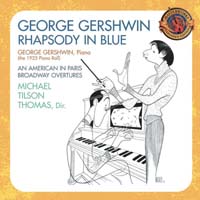
One week with Piano Concerto: thoughts on George Gershwin
Piano Concerto- Album Overview
George Gershwin's "Piano Concerto in F," composed in 1925, represents a pivotal moment in the fusion of classical and popular music. This groundbreaking work was commissioned by the New York Philharmonic and premiered under the baton of Walter Damrosch at Carnegie Hall on December 3, 1925. The concerto is notable not just for its innovative blend of jazz elements with classical forms but also for its reflection of the vibrant cultural landscape of 1920s America.
Gershwin, a self-taught pianist and composer, drew upon his experiences in the burgeoning jazz scene of New York City, integrating syncopated rhythms and bluesy motifs. The work is characterized by its three movements: Allegro, Adagio, and Allegro agitato. The first movement opens with a bold orchestral statement, leading into a dazzling piano solo that showcases Gershwin's virtuosic style. The second movement, Adagio, evokes a dreamy quality with lyrical melodies, while the final movement bursts forth with exuberance and energy, culminating in a rousing conclusion.
The album was first released by Columbia Records and has been recorded numerous times, with various interpretations by celebrated pianists such as Horace Parlan, Leonard Bernstein, and Lang Lang. Its cultural significance cannot be overstated; "Piano Concerto in F" played a crucial role in establishing the legitimacy of American composers within the classical canon. It has influenced countless musicians and remains a staple in concert repertoires worldwide, bridging gaps between genres and inviting audiences to appreciate the richness of American music.
Review
Listening to Gershwin's "Piano Concerto in F" is like taking a journey through the heart of 1920s America, where jazz clubs and concert halls converged. The concerto masterfully juxtaposes the spontaneity of jazz with the precision of classical composition. Gershwin's writing for the piano is both technically demanding and deeply expressive, allowing the performer to showcase both skill and emotion.
The orchestration complements the piano beautifully, with woodwinds and brass providing a vibrant backdrop that enhances the soloist’s lines. The conversational interplay between the piano and the orchestra creates a dynamic tension that captures the listener's attention throughout. The thematic development is rich, with motifs that are revisited and transformed, demonstrating Gershwin's compositional prowess.
While there are no lyrics in the traditional sense, the music tells a story filled with joy, nostalgia, and a touch of melancholy. The overall artistic vision reflects a unique moment in American history, merging influences from European classical traditions with the distinctly American sound of jazz. Gershwin’s ability to transcend genres has left an indelible mark on both classical and popular music, making this concerto an enduring masterpiece.
Highlights
- Innovative blend of jazz and classical elements.
- Virtuosic piano writing that showcases technical skill and emotional depth.
- Cultural significance as a bridge between genres, influencing future composers.
Weak points
- Some purists may find the jazz influences too unconventional for classical music.
- Occasional reliance on clichés of the era may detract from its timelessness.
- The energetic final movement might feel overwhelming to some listeners.
Overall evaluation
George Gershwin's "Piano Concerto in F" remains a landmark work that captures the spirit of its time while transcending its era. Its seamless integration of jazz and classical elements offers a rich listening experience that continues to resonate with audiences today.
Personal rating: 9/10