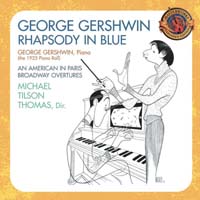
ALBUM NOTESInside the atmosphere of George Gershwin's Gershwin Overtures
Gershwin Overtures- Album Overview
The album "Gershwin Overtures" features the orchestral compositions of George Gershwin, an American composer and pianist renowned for his contributions to both classical music and popular song. Released in 1959 by RCA Victor, this collection showcases some of Gershwin's most celebrated overtures, including his iconic pieces from operas and musicals such as "Porgy and Bess" and "Rhapsody in Blue." The album serves as a testament to Gershwin's unique ability to blend jazz influences with classical forms, creating a sound that was distinctly American.
The recordings were conducted by the distinguished conductor and composer, Leonard Bernstein, who played a significant role in bringing Gershwin's music to a wider audience. Bernstein's interpretation of Gershwin's work infused a contemporary flair while maintaining respect for the original compositions. The album features arrangements by prominent orchestrators, ensuring that the vibrant energy of Gershwin's music is preserved.
Significantly, "Gershwin Overtures" captures the cultural zeitgeist of the late 1950s, reflecting a burgeoning appreciation for jazz and its integration into classical music. The overtures are not merely standalone pieces; they serve as a bridge connecting the worlds of concert music and popular entertainment. This album remains a pivotal work in understanding the evolution of American music and Gershwin's lasting influence on both genres.
Review
"Gershwin Overtures" is a splendid showcase of George Gershwin's genius, reflecting his innovative spirit and the dynamic energy of early 20th-century America. The orchestrations are lush and vibrant, breathing new life into Gershwin’s rich melodies. Bernstein's conducting adds a layer of sophistication, capturing the essence of Gershwin’s intent while allowing the music to resonate with modern audiences.
The sound quality is impeccable, with each instrument shining through the mix, allowing listeners to appreciate the intricate harmonies and rhythmic complexities. While Gershwin's works are primarily instrumental, the emotional depth conveyed through the orchestration speaks volumes, evoking a range of feelings from joy to nostalgia. The arrangement of "Rhapsody in Blue," in particular, stands out with its jazz-infused piano sections seamlessly merging with orchestral backing.
Overall, the album illustrates Gershwin's ability to transcend genres, making it a delightful listening experience for both classical music enthusiasts and jazz aficionados alike.
Highlights
- Brilliant orchestral arrangements that highlight Gershwin's melodic genius.
- Bernstein's dynamic conducting breathes new life into classic works.
- A rich soundscape that captures the cultural essence of America in the late 1950s.
Weak points
- Some may find the interpretations differ too much from the originals.
- Limited selection of Gershwin's repertoire compared to his extensive catalog.
- The album may not appeal to those who prefer strictly traditional classical music.
Overall evaluation
"Gershwin Overtures" is an essential album that showcases the stunning intersection of jazz and classical music through Gershwin's work, masterfully executed by Bernstein. It serves as an important cultural artifact that highlights the evolution of American music.
Personal rating: 8.5/10