
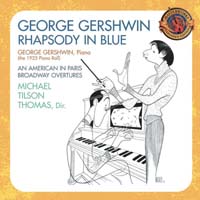
Inside the atmosphere of George Gershwin's Rhapsody In Blue / Appalachian Spring / Quiet City
Rhapsody In Blue / Appalachian Spring / Quiet City- Album Overview
Released in 1950, the album "Rhapsody In Blue / Appalachian Spring / Quiet City" features some of the most iconic compositions by American composer George Gershwin, alongside works by Aaron Copland and other contemporaries. This collection is significant not only for its musical content but also for its cultural impact, capturing the essence of early 20th-century American music. The album showcases Gershwin's "Rhapsody In Blue," a piece that melds classical and jazz influences, and is often credited with bringing jazz into the concert hall. "Appalachian Spring," composed by Copland, is a ballet score that evokes the American frontier spirit, while "Quiet City" reflects the quieter, introspective side of urban life. The album was recorded under the Columbia Records label and features performances by the New York Philharmonic, conducted by Leonard Bernstein, and other notable musicians, including pianist William Kapell. The orchestration in these pieces highlights the unique blend of orchestral and jazz elements, with Gershwin’s work being a precursor to many modern musical forms. The cultural significance of this album is profound, as it encapsulates the transition of American music from traditional European roots to a more distinctly American sound, embodying the optimism and complexity of the American experience in the early 20th century. The album has been reissued multiple times, continuing to resonate with audiences and musicians alike, making it a staple in both classical and jazz repertoires. Its enduring legacy also speaks to Gershwin's ability to capture the zeitgeist of his era, bridging gaps between genres and appealing to a wide array of listeners.
Review
The album "Rhapsody In Blue / Appalachian Spring / Quiet City" offers a compelling auditory journey that showcases the brilliance of George Gershwin and his contemporaries. Starting with "Rhapsody In Blue," the energetic piano riffs immediately draw listeners into a world where jazz meets classical—it's a dynamic opening that sets the tone for what follows. Gershwin's genius lies in his ability to blend different musical idioms, creating a sound that is both familiar and innovative. The orchestration is lush, with the New York Philharmonic delivering a performance that is both powerful and nuanced. Transitioning to Copland's "Appalachian Spring," the mood shifts to a more pastoral and reflective soundscape. The piece is characterized by its simplicity and grace, evoking images of rural America and the spirit of hope. The seamless integration of these two contrasting works within the album highlights the diverse emotional landscapes that American composers were exploring during this period. "Quiet City," with its haunting melodies and contemplative atmosphere, serves as a perfect conclusion to the album. The piece's introspective quality invites listeners to reflect on the complexities of urban life, contrasting sharply with the exuberance of the earlier tracks. Overall, the album not only showcases the individual talents of Gershwin and Copland but also encapsulates the broader narrative of American music's evolution.
Highlights
- The seamless blending of jazz and classical elements in "Rhapsody In Blue."
- The pastoral beauty and emotional depth of Copland's "Appalachian Spring."
- The introspective nature of "Quiet City," providing a thoughtful conclusion to the album.
Weak points
- Some may find "Rhapsody In Blue" overly familiar due to its frequent performances in popular culture.
- The contrasting styles of the compositions might not appeal to all listeners.
- The recording quality, while good for its time, may feel dated compared to contemporary recordings.
Overall evaluation
"Rhapsody In Blue / Appalachian Spring / Quiet City" is a remarkable collection that highlights the creative genius of George Gershwin and his contemporaries. This album is essential listening for anyone interested in the evolution of American music