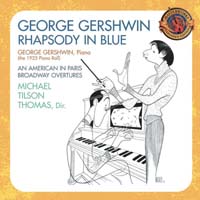
ALBUM NOTESListening guide: George Gershwin's Rhapsody In Blue / An American In Paris / Piano Co
Rhapsody In Blue / An American In Paris / Piano Co- Album Overview
George Gershwin's "Rhapsody In Blue / An American In Paris / Piano Co" is a quintessential album that showcases the genius of one of America's most celebrated composers. Released in 1979 under the RCA Victor label, this collection features orchestral renditions that highlight Gershwin's unique ability to blend classical music with jazz elements, a hallmark of his style. The album comprises some of his most famous works: "Rhapsody in Blue," first premiered in 1924, and "An American in Paris," composed in 1928. Both pieces reflect the vibrant cultural landscape of America during the early 20th century, encapsulating the spirit of optimism and energy that characterized the Jazz Age.
Notably, the album features stellar performances from renowned orchestras, with the New York Philharmonic under the direction of Leonard Bernstein delivering a riveting interpretation of Gershwin's compositions. The recording not only preserves the integrity of Gershwin's original scores but also introduces them to new audiences, celebrating the composer’s legacy. "Rhapsody in Blue" is particularly significant as it broke musical barriers, being one of the first compositions to successfully fuse classical music with jazz influences, thus paving the way for future explorations in American music. The album remains a vital piece of cultural history, showcasing Gershwin's contributions that resonate in modern music and continue to inspire artists across genres.
Review
The album opens with "Rhapsody in Blue," a piece that captivates listeners with its sweeping melodies and intricate piano work. Gershwin’s use of syncopation and bluesy phrases creates a vibrant soundscape that feels both fresh and timeless. The orchestral arrangement enhances the piano's emotive quality, making it a standout track that has become synonymous with American music itself.
Following this is "An American in Paris," which paints a vivid auditory picture of the Parisian landscape through its rich orchestration and harmonic complexity. The interplay between the orchestra and piano is masterfully executed, showcasing Gershwin's ability to evoke imagery through sound. The music captures the essence of American expatriate life, blending European classical influences with American jazz.
Throughout the album, Gershwin's artistic vision shines as he explores themes of identity and cultural exchange. The compositions are expertly crafted, offering a feast for both the ears and the imagination. The production quality is top-notch, allowing the listener to fully appreciate the nuances of Gershwin's work.
Highlights
- Masterful blend of classical and jazz elements that defines Gershwin's style.
- Outstanding orchestration, particularly in the performances of the New York Philharmonic.
- Cultural significance as a representation of the Jazz Age and American identity.
Weak points
- Some listeners may find the orchestral arrangements less engaging than piano solo versions.
- Limited variety in the album’s offerings; primarily focuses on two major works.
- The 1979 recording may not match the crispness of modern recordings in terms of sound quality.
Overall evaluation
"Rhapsody In Blue / An American In Paris / Piano Co" is a stellar representation of George Gershwin’s most beloved works. The album successfully showcases the composer's genius while maintaining a high standard of performance and production. It is a must-listen for anyone interested in the evolution of American music and the lasting impact of Gershwin’s contributions.
Personal rating: 9/10