
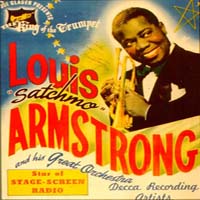
Diving deep into Limehouse Blues by Louis Armstrong
Limehouse Blues- Album Overview
"Limehouse Blues" is a remarkable album by the legendary jazz trumpeter Louis Armstrong, released in 1954 under the Columbia Records label. The album is a collection of several tracks that showcases Armstrong's signature sound and innovative approach to jazz. The title track, "Limehouse Blues," is a classic composition originally written by Douglas Furber and Philip Braham in 1922. Armstrong's rendition is marked by his distinctive trumpet playing and charismatic vocal style, which breathe new life into the piece. The album features an array of talented collaborators, including the renowned pianist and arranger, Billy Kyle, and the brilliant trombonist, Jack Teagarden. The recording sessions took place in the early 1950s, a period when Armstrong was at the height of his artistic prowess. The production captures the essence of the jazz genre, blending traditional New Orleans influences with a modern sensibility that resonated with audiences of the time. Although there were no official singles released from the album, tracks like "Limehouse Blues" and "Ain't Misbehavin'" gained significant popularity and showcased Armstrong's ability to reinterpret classics. The cultural significance of this album lies in its role in popularizing jazz music during a time when it was rapidly evolving. Armstrong's interpretation of "Limehouse Blues" remains influential, serving as a testament to his legacy and the enduring appeal of jazz music.
Review
Sound-wise, "Limehouse Blues" is a breathtaking showcase of Armstrong's unparalleled trumpet skills and emotive vocal delivery. The album exudes a warm, intimate feel, characteristic of the best jazz recordings of the era. Armstrong's ability to weave complex melodies with playful improvisation is evident throughout the tracks. His voice, rich and gravelly, adds an emotional layer that enhances the storytelling aspect of the lyrics. The artistic vision behind the album is clear: Armstrong seeks to bridge the gap between traditional jazz and contemporary sounds, inviting listeners on a journey through time and emotion. Each track is meticulously arranged, allowing for moments of spontaneity that jazz aficionados cherish. The interplay among the musicians is seamless, reflecting a deep understanding and respect for the genre's roots while also pushing its boundaries. Armstrong's interpretation of "Limehouse Blues" stands out, transforming it from a mere standard into a heartfelt expression of yearning and nostalgia. The album captures the essence of jazz as a living art form, showcasing both technical prowess and emotional depth.
Highlights
- Armstrong's masterful trumpet solos elevate each track.
- The rich arrangements create a warm, inviting atmosphere.
- Emotive vocal performances that resonate with listeners.
Weak points
- Some may find the production style dated compared to modern jazz recordings.
- The album lacks a broader range of original compositions.
- Tracks may feel repetitive due to stylistic similarities.
Overall evaluation
"Limehouse Blues" is a testament to Louis Armstrong's genius and a vital piece of jazz history. While it may not showcase the full spectrum of his capabilities, it remains a captivating listen that offers insight into his artistic vision and the jazz genre's evolution. Personal rating: 8/10