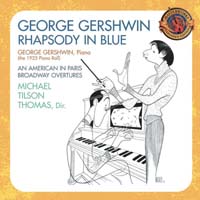
ALBUM NOTESAlbum spotlight: George Gershwin-Gershwin: Rhapsody In Blue / Barber: Adagio For Strings / Coplan – Gershwin: Rhapsody In Blue / Barber: Adagio For St
Album overview
The album "Gershwin: Rhapsody In Blue / Barber: Adagio For Strings," featuring George Gershwin's iconic "Rhapsody in Blue" and Samuel Barber's poignant "Adagio for Strings," showcases the brilliance of American classical music. Released in 1992 under the label RCA Victor, this recording is notable for its lush orchestration and emotive performances. Conducted by the esteemed Leonard Bernstein, the album captures the essence of both compositions, with the New York Philharmonic delivering a masterful interpretation of Gershwin's jazz-infused concerto, which premiered in 1924 and revolutionized the genre by blending classical music with jazz elements. Barber's "Adagio," composed in 1936, stands as one of the most recognizable pieces in the classical canon, often associated with moments of reflection and mourning. The album is a testament to the cultural zeitgeist of early 20th-century America, reflecting the country's evolving musical landscape. Collaborators on this project include renowned soloists and orchestral players, adding depth and nuance to the performances. The release has garnered critical acclaim, further solidifying the significance of both Gershwin and Barber in the American music tradition.
Review
This album presents a remarkable juxtaposition of two distinct yet complementary works, each emblematic of its composer’s unique voice. Gershwin's "Rhapsody in Blue" bursts with vitality, characterized by its syncopated rhythms and sweeping melodies. The piano's improvisatory spirit, brought to life through virtuosic performances, creates an engaging dialogue with the orchestra. In contrast, Barber's "Adagio for Strings" provides a stark emotional counterpoint, its hauntingly beautiful harmonies invoking a deep sense of pathos. The overall production is polished, with Bernstein's direction allowing the orchestra to shine while maintaining a cohesive sound throughout. The album transcends mere performance, capturing the essence of American classical music's evolution and showcasing the profound emotional range that these works evoke.
Highlights
- Exceptional interpretation of Gershwin's "Rhapsody in Blue," blending jazz and classical elements seamlessly.
- Bernstein's masterful conducting brings depth to Barber's "Adagio for Strings," highlighting its emotional resonance.
- High-quality orchestral performance from the New York Philharmonic, showcasing technical prowess and expressive playing.
Weak points
- Some listeners may find the juxtaposition of the two compositions jarring, given their differing emotional tones.
- The album's length may feel short for those seeking a more extensive exploration of these composers' works.
- Production quality, while generally excellent, may not meet the high standards of modern recordings for some audiophiles.
Overall evaluation
"Rhapsody in Blue / Adagio for Strings" is a captivating album that effectively showcases the genius of Gershwin and Barber. While it presents a few minor shortcomings, the overall performance and emotional depth make it a significant addition to any classical music collection.
Personal rating: 8/10
```