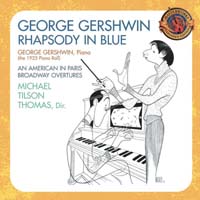
ALBUM NOTESListening to Gershwin: An American In Paris / Rhapsody In Blue by George Gershwin
Gershwin: An American In Paris / Rhapsody In Blue - Album Overview
The album "Gershwin: An American In Paris / Rhapsody In Blue," released in 1959, showcases two of George Gershwin's most celebrated compositions, bringing together the vibrant orchestral suite "An American in Paris" and the iconic jazz-influenced "Rhapsody in Blue." Released under the Columbia Records label, the album features a range of talented musicians, including conductor Leonard Bernstein, who is known for his dynamic interpretations and profound understanding of American music.
"Rhapsody in Blue," originally composed in 1924 for a concert, blends classical music with jazz elements, representing a significant cultural moment in American music history. It was first performed by Gershwin himself with Paul Whiteman's orchestra, marking a turning point in the acceptance of jazz as a serious art form. "An American in Paris," composed in 1928, is a symphonic poem that vividly depicts the sights and sounds of Paris from an American's perspective, filled with the charm and vibrancy of the city.
The recording sessions captured the essence of Gershwin's genius, intertwining classical sophistication with a distinctly American flair. This album not only serves as a testament to Gershwin's lasting influence on music but also highlights the collaboration between classical and popular genres, paving the way for future composers and musicians. Over the decades, both pieces have become staples in the orchestral repertoire, celebrated for their innovative spirit and emotional depth, making this album a significant cultural artifact that continues to resonate with audiences today.
Review
The album encapsulates the essence of George Gershwin's artistic vision, brilliantly fusing jazz rhythms with classical structures. The orchestration in "Rhapsody in Blue" is particularly noteworthy, as it captures the exuberance and complexity of the American experience in the early 20th century. Bernstein's conducting breathes new life into the pieces, allowing each instrument to shine while maintaining a cohesive sound that is both rich and inviting.
"An American in Paris" is another highlight, with its lush orchestral textures that paint a vivid auditory picture of a bustling city. The piece's thematic material and motifs are expertly woven together, creating a narrative that is both charming and reflective. Gershwin's use of syncopation and unexpected harmonic shifts adds an element of surprise, keeping listeners engaged throughout.
The album's production quality is excellent, with a clarity that allows the nuances of the performances to come through. The balance between the orchestra and the solo piano in "Rhapsody in Blue" is particularly impressive, showcasing Gershwin's ability to blend different musical traditions. Overall, the album is a celebration of Gershwin's genius and his unique ability to transcend genres, making it a must-listen for both classical and jazz aficionados.
Highlights
- Masterful orchestration that blends classical and jazz seamlessly.
- Leonard Bernstein's dynamic conducting enhances the emotional depth of the pieces.
- The cultural significance of the compositions reflects the spirit of early 20th-century America.
Weak points
- The album may feel dated to some listeners unfamiliar with classical music.
- Some interpretations may seem less adventurous compared to modern renditions.
- Limited track variety, focusing solely on two major compositions.
Overall evaluation
"Gershwin: An American In Paris / Rhapsody In Blue" is a timeless classic that encapsulates the spirit of American music through its innovative fusion of genres. The performances are both technically impressive and emotionally resonant, making it a significant addition to any music lover's collection.
Personal rating: 9/10