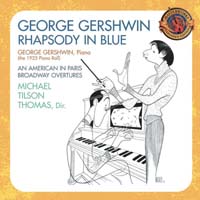
ALBUM NOTESFirst impressions of George Gershwin – An American In Paris / Rhapsody In Blue
An American In Paris / Rhapsody In Blue- Album Overview
George Gershwin's "An American In Paris / Rhapsody In Blue" is a landmark album in the American classical genre, originally released in 1924. The album features two of Gershwin's most celebrated compositions: the orchestral tone poem "An American in Paris" and the groundbreaking jazz-influenced concerto "Rhapsody in Blue." Recorded by various orchestras over the years, the most notable renditions were made under the baton of Leonard Bernstein and the New York Philharmonic, which helped to popularize Gershwin’s work in classical music circles.
"Rhapsody in Blue," premiered on February 12, 1924, at Aeolian Hall in New York City, is often credited with bridging the gap between classical and popular music, incorporating jazz motifs and rhythms that were revolutionary at the time. This piece encapsulates the spirit of the Jazz Age and has become a quintessential part of American music heritage. "An American in Paris," composed in 1928, vividly portrays the experience of an American expatriate in the French capital, complete with impressions of the city's ambiance and culture, and it has been praised for its orchestral colors and narrative quality.
Both works showcase Gershwin's innovative blending of classical structures with American jazz influences, making them culturally significant as they reflect the evolving identity of American music in the early 20th century. The album has been released by various labels, including RCA Victor and Columbia Records, contributing to its enduring legacy and influence on generations of musicians and composers.
Review
Gershwin's ability to fuse distinct musical genres is on full display in this album. "Rhapsody in Blue" opens with its iconic clarinet glissando, setting a playful yet sophisticated tone that captivates listeners. The piece unfolds like a jazz improvisation, yet it adheres to classical forms, showcasing Gershwin's genius in marrying spontaneity with structure. The orchestration is rich and vibrant, allowing for a dynamic interplay between the piano and the orchestra, which creates a thrilling listening experience.
"An American in Paris" follows with its cinematic flair, illustrating the hustle and bustle of Parisian life through its rhythmic motifs and contrasting musical themes. The work’s orchestral arrangement conveys a sense of movement and travel, inviting listeners to visualize the sights and sounds of the city. Gershwin's use of French musical elements, such as the inclusion of taxi horns, adds an authentic touch to this auditory journey.
Overall, both pieces exhibit Gershwin's masterful ability to capture the essence of American life and culture in the early 20th century, making his music eternally relevant and enjoyable.
Highlights
- The innovative blend of jazz and classical elements creates a unique listening experience.
- Gershwin's orchestration is vivid and colorful, drawing listeners into the musical narrative.
- The cultural significance of both pieces reflects the spirit of America in the 1920s and beyond.
Weak points
- Some listeners may find the orchestral arrangements overly complex or dense.
- The album's age may not appeal to everyone, especially those unfamiliar with early 20th-century music.
- Limited lyrical content in the instrumental pieces may leave some wanting more in terms of vocal performances.
Overall evaluation
"An American In Paris / Rhapsody In Blue" is a quintessential representation of George Gershwin's artistry, blending jazz influences with classical music in a way that was innovative for its time. This album is not just a collection of pieces; it's a cultural touchstone that continues to resonate with audiences today.
Personal rating: 9/10