
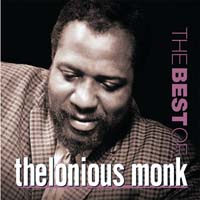
One week with With Thelonious Monk: thoughts on Thelonious Monk
With Thelonious Monk- Album Overview
"With Thelonious Monk" is a seminal jazz album released in 1963 by the iconic pianist and composer Thelonious Monk. This album, recorded for the Columbia label, features a collection of tracks that embody Monk's innovative approach to jazz. Notably, the album includes collaborations with renowned musicians such as John Coltrane on tenor saxophone, Art Davis on bass, and Elvin Jones on drums, collectively contributing to the album's rich sound.
The recording sessions took place in the early 1960s when Monk was at the height of his creative powers. "With Thelonious Monk" showcases Monk's unique style, characterized by his unconventional harmonies and rhythmic complexity. The album features several of Monk's original compositions, including "Epistrophy," "Well You Needn't," and "Ask Me Now," which have since become jazz standards.
This album is significant not just for its musical content but also for its cultural impact, as it represents a period when jazz was evolving and pushing boundaries. The collaboration with Coltrane, who was also developing his innovative sound, adds a layer of depth to the album, making it a crucial piece in both artists' discographies. "With Thelonious Monk" remains a critical touchstone for both jazz enthusiasts and those exploring the genre, reflecting the spirit of experimentation and creativity that defined the era.
Review
The sound of "With Thelonious Monk" is both intricate and accessible, a testament to Monk's genius as a composer and performer. Each track stands out, with Monk's piano work weaving effortlessly around Coltrane's robust saxophone melodies. The interplay between the musicians is a highlight, showcasing their ability to communicate through music in a way that feels spontaneous yet meticulously crafted.
Musically, the album balances Monk's signature dissonance with lyrical beauty, creating moments that are both contemplative and invigorating. The absence of lyrics allows the instrumentation to convey emotions, and Monk's playful yet profound approach to jazz shines through. His distinctive style is evident, marked by unexpected chord changes and a rhythmic complexity that challenges the listener while remaining engaging.
Artistically, "With Thelonious Monk" encapsulates the essence of jazz during a transformative period. Monk's vision of jazz as a form of personal expression resonates throughout the album, inviting listeners to explore the depths of musical improvisation. Overall, the album is a masterclass in jazz, illustrating why Monk is considered one of the genre's greatest innovators.
Highlights
- Rich interplay between Monk's piano and Coltrane's saxophone, creating a dynamic listening experience.
- Innovative compositions that have become jazz standards, showcasing Monk's genius as a composer.
- The album's cultural significance, representing a pivotal moment in jazz history.
Weak points
- Some listeners may find Monk's style challenging due to its dissonance and complexity.
- The album's production quality, while reflective of its time, may not meet the standards of contemporary recordings.
- Lack of vocal tracks may limit appeal for those who prefer lyrics in their music.
Overall evaluation
"With Thelonious Monk" stands as a landmark in jazz history, showcasing the unparalleled creativity of Thelonious Monk and his collaborators. It is an essential listen for anyone looking to understand the evolution of jazz and the artistry behind it.
Personal rating: 9/10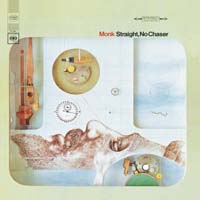 1967Straight, No Chaser
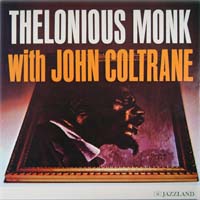 1961Thelonious Monk with John Coltrane
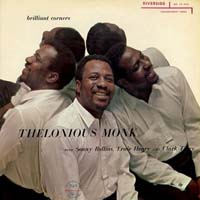 1957Brilliant Corners