
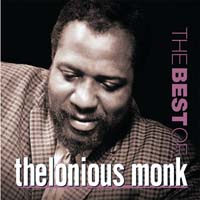
Breaking down the themes in Mulligan Meets Monk by Thelonious Monk
Mulligan Meets Monk- Album Overview
"Mulligan Meets Monk" is a landmark jazz album released in 1963, featuring the innovative pianist Thelonious Monk and the virtuosic baritone saxophonist Gerry Mulligan. Recorded for the iconic label Columbia Records, this album captures a unique moment in jazz history, bringing together two distinct yet complementary musical voices. The sessions took place in 1963, showcasing a blend of Monk's intricate melodies and Mulligan's lyrical improvisations. The album features a stellar supporting cast, including drummer Ben Riley and bassist Larry Gales, who help create a cohesive sound that balances spontaneity with structure.
The album consists of seven tracks, including notable pieces like "Well, You Needn't" and "Blue Monk," which highlight Monk's signature style. The collaborations on this album reflect a deep understanding of jazz's harmonic richness and rhythmic complexity. Not only does it serve as a testament to Monk's genius, but it also illustrates Mulligan's ability to navigate Monk's unusual time signatures and idiosyncratic chord changes. The cultural significance of "Mulligan Meets Monk" lies in its ability to bridge the gap between different jazz styles, showcasing the fluidity of the genre during a transformative era. This album remains a quintessential work for both Monk and Mulligan, celebrated for its artistic depth and improvisational brilliance.
Review
The sound of "Mulligan Meets Monk" is a rich tapestry woven from the intricate melodies of Thelonious Monk and the smooth, flowing lines of Gerry Mulligan. The interplay between the two musicians is both conversational and exploratory, creating a musical dialogue that is both engaging and profound. Monk's compositions are infused with a playful yet avant-garde spirit, while Mulligan's baritone saxophone lends a warm, lyrical quality that complements Monk's more dissonant tendencies. The album is marked by a sense of spontaneity, with both artists pushing each other to new heights of creativity.
Musically, the album stands out for its distinctive arrangements and the seamless blending of different jazz styles. Monk’s playful rhythms and harmonies challenge traditional jazz structures, while Mulligan’s improvisational prowess adds a level of sophistication and accessibility. This dynamic collaboration not only showcases the individual talents of both artists but also reflects the broader evolution of jazz in the 1960s, as musicians began to experiment with form and expression in new ways.
Highlights
- Intricate interplay between Monk's piano and Mulligan's saxophone.
- Strong compositions that highlight the unique styles of both artists.
- A significant cultural artifact that represents the innovation of 1960s jazz.
Weak points
- Some listeners may find Monk's unconventional approach challenging.
- The album's sound may feel dated to modern audiences unfamiliar with jazz history.
- Limited promotional singles, which may restrict broader audience engagement.
Overall evaluation
"Mulligan Meets Monk" is a vital work that encapsulates the creativity and spirit of jazz in the early 1960s. The collaboration between Monk and Mulligan is a testament to the genre's ability to foster innovative musical dialogues. This album is a must-listen for jazz enthusiasts and serves as a brilliant introduction to the works of both artists.
Personal rating: 9/10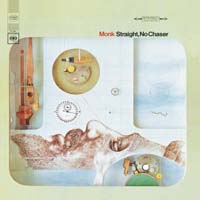 1967Straight, No Chaser
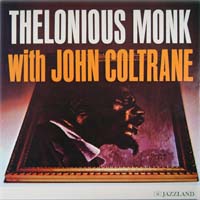 1961Thelonious Monk with John Coltrane
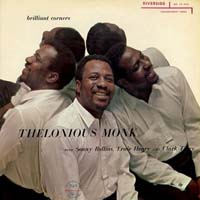 1957Brilliant Corners