
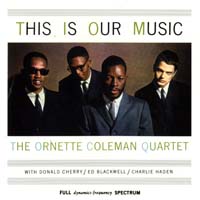
Breaking down the themes in To Whom Who Keeps a Record by Ornette Coleman
To Whom Who Keeps a Record- Album Overview
Released in 1975, "To Whom Who Keeps a Record" is a seminal album by avant-garde jazz pioneer Ornette Coleman. This album, released under the Columbia Records label, marked a significant point in Coleman's career, showcasing his ability to blend free jazz with more structured compositions. Recorded during a period of experimentation, the album features a unique lineup, including notable musicians such as Don Cherry on trumpet, Charlie Haden on bass, and Ed Blackwell on drums. The collaborative nature of the album reflects the communal spirit that Coleman often sought in his music. The recording sessions were characterized by a sense of spontaneity, with Coleman encouraging his fellow musicians to explore their own interpretations within the framework of his compositions.
The album features nine tracks, with notable pieces such as "The Art of Love" and "The Legend of the Blues," which emphasize Coleman's innovative approach to melody and rhythm. Lyrically, the album addresses themes of love, existence, and the pursuit of understanding, echoing Coleman's lifelong quest for deeper connections through music. The album's release came at a time when jazz was evolving, and Coleman's work continued to influence not just jazz but also a myriad of genres, including rock and avant-garde music. "To Whom Who Keeps a Record" stands as a testament to Coleman's artistic vision and his belief in the power of music as a form of communication.
Review
The sound of "To Whom Who Keeps a Record" is a complex tapestry woven from the threads of free jazz and structured improvisation. Coleman's alto saxophone takes center stage, delivering his signature sound that is both raw and emotive. The interplay between the musicians is mesmerizing, with Cherry's trumpet and Haden's bass providing a rich backdrop for Coleman's explorations. The album's artistic vision is evident in its refusal to conform to traditional jazz structures, instead prioritizing emotional expression and individual voice. The lyrical content, while abstract, resonates with themes of love and existential inquiry, inviting listeners to engage on a deeper level.
Musically, the tracks oscillate between frenetic energy and serene introspection, reflecting the duality of human experience. This dichotomy is particularly evident in tracks like "The Art of Love," where the balance between chaos and harmony creates a captivating listening experience. Coleman's ability to convey complex emotions through his music makes this album not just a collection of songs, but a profound artistic statement.
Highlights
- The intricate interplay between musicians enhances the listening experience.
- Ornette Coleman's unique saxophone tone captivates and engages.
- The thematic depth addressing love and existence resonates profoundly.
Weak points
- The abstract nature of the lyrics may alienate some listeners.
- Some tracks may feel less accessible than Coleman's earlier works.
- The album's experimental approach may not appeal to traditional jazz purists.
Overall evaluation
Overall, "To Whom Who Keeps a Record" is a compelling exploration of the depths of human emotion through the lens of avant-garde jazz. Ornette Coleman's fearless approach to composition and collaboration makes this album a significant contribution to the jazz canon. While it may challenge conventional expectations, it ultimately rewards listeners with its richness and complexity.
Personal rating: 8/10 1977Dancing in Your Head
 1972Skies of America
 1962Ornette on Tenor
 1959Tomorrow Is the Question!
 1959The Shape of Jazz to Come