
A closer look at Ornette Coleman's album Free Jazz
Free Jazz- Album Overview
Released in 1961, "Free Jazz: A Collective Improvisation" is a groundbreaking album by American jazz saxophonist Ornette Coleman. The album was released under the Atlantic Records label and is widely regarded as a seminal work in the free jazz genre. The recording took place on December 21, 1960, at the Van Gelder Studio in Englewood Cliffs, New Jersey, a site known for its exceptional sound quality and iconic jazz recordings. "Free Jazz" features a double quartet, consisting of two separate ensembles led by Coleman on alto saxophone, Don Cherry on trumpet, Charlie Haden on bass, and Ed Blackwell on drums, alongside a second group featuring Dewey Redman on tenor saxophone, Jimmy Garrison on bass, and more, providing a rich tapestry of sound. The album's title track, which spans over 37 minutes, is a continuous piece that allows for collective improvisation, a radical departure from traditional jazz forms. This innovative approach emphasizes the musicians' spontaneous creativity, breaking free from preset chord changes and rhythms. "Free Jazz" was influential not only musically but also culturally, symbolizing the broader avant-garde movement of the 1960s, which sought to challenge and redefine artistic boundaries. Its release marked a pivotal moment in jazz history, paving the way for future generations of musicians to explore more experimental approaches to composition and performance.
Review
Ornette Coleman's "Free Jazz" is an audacious exploration of sound that defies conventional musical structures. The album's improvisational nature sets it apart from traditional jazz, creating an unpredictable yet cohesive auditory experience. The interplay between the two quartets showcases a remarkable level of communication and spontaneity that few albums have achieved. Each musician contributes their unique voice, resulting in a rich, textured sound that can feel chaotic yet profoundly moving. Coleman's alto saxophone leads with an emotional intensity that captures a wide range of human experiences, while Cherry's trumpet adds a contrasting brightness. The absence of predetermined chord progressions allows for an organic flow, where themes emerge and dissolve in a matter of moments. This lack of structure may be challenging for listeners accustomed to more conventional jazz forms, but it invites a deep engagement with the music, urging audiences to embrace the unfamiliar. The album's cultural significance cannot be overstated; it not only signifies a shift in jazz but also reflects the societal changes of its time, emphasizing freedom and expression in an era marked by turbulence and transformation.
Highlights
- Innovative use of collective improvisation that pushes the boundaries of traditional jazz.
- Rich textures and emotional depth created by the dual quartets.
- Cultural significance as a landmark recording in the avant-garde movement.
Weak points
- Its unconventional structure may alienate traditional jazz listeners.
- Some moments may feel chaotic or dissonant to those unfamiliar with free jazz.
- The lengthy title track could challenge the patience of casual listeners.
Overall evaluation
Ornette Coleman's "Free Jazz" is a revolutionary work that redefined the possibilities of jazz music. Its bold experimentation and commitment to improvisation make it an essential listen for anyone interested in the evolution of the genre.
Personal rating: 9/10 1977Dancing in Your Head
 1972Skies of America
 1962Ornette on Tenor
 1959Tomorrow Is the Question!
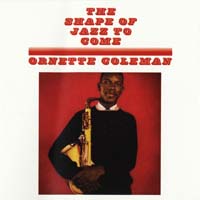 1959The Shape of Jazz to Come