ALBUM NOTESThelonious Monk experiments boldly on Art Blakey’s Jazz Messengers With Thelonious Monk
Art Blakey’s Jazz Messengers With Thelonious Monk- Album Overview
The album "Art Blakey's Jazz Messengers With Thelonious Monk" was released in 1957 under the Blue Note label, a pivotal moment in jazz history that reflects the intersection of two titans of the genre. This collaboration features the innovative pianist Thelonious Monk alongside the iconic drummer Art Blakey and his renowned ensemble, the Jazz Messengers. The recording took place during a notable period when Monk was beginning to solidify his unique style, characterized by dissonance and unconventional rhythms, which he masterfully interweaves with Blakey's hard-bop sensibilities.
The album's lineup includes prominent musicians such as saxophonist Wayne Shorter and trumpeter Lee Morgan, both of whom would later become significant figures in jazz. The tracks present a variety of Monk's compositions, including "Well, You Needn't" and "Blue Monk," showcasing his distinctive approach to melody and harmony. This project stands as a testament to the bold experimentation that defined the jazz movement of the late 1950s.
Culturally, the album embodies the spirit of innovation that was prevalent in the jazz scene at the time, pushing boundaries and defying conventional jazz forms. It laid the groundwork for future generations of jazz musicians, influencing countless artists who sought to explore the avant-garde. The interplay between Monk's piano and Blakey's dynamic drumming creates an exhilarating listening experience, making it a significant contribution to the jazz canon.
Review
"Art Blakey's Jazz Messengers With Thelonious Monk" is an exhilarating showcase of two formidable forces in jazz, where Monk's unique harmonic language meets Blakey's vibrant rhythmic pulse. The album is notable for its unorthodox structures and Monk's idiosyncratic style, which often includes abrupt angular shifts that catch the listener off guard. The interplay between Monk's piano and the Messengers' brass section creates a lush, textured sound that is both intricate and accessible.
The arrangements are tight yet allow for ample improvisation, highlighting each musician's individual talents. Tracks like "Straight, No Chaser" serve as a perfect platform for the ensemble to demonstrate their collective prowess while retaining Monk's distinctive charm. However, the album's experimental nature might be challenging for some listeners, as Monk's abstractions can occasionally stray from traditional jazz forms.
Overall, the artistic vision is clear: it is about pushing boundaries and exploring new terrain in jazz. The chemistry between Monk and Blakey is palpable, resulting in a recording that feels both spontaneous and meticulously crafted.
Highlights
- Monk's innovative piano work, blending dissonance with melody.
- Blakey's explosive drumming that drives the rhythm and energy of the album.
- The exceptional chemistry among the ensemble, creating a dynamic listening experience.
Weak points
- Some tracks may feel disjointed or challenging for traditional jazz listeners.
- The album's experimental nature might overshadow Monk's melodic strengths at times.
- Limited availability of high-quality recordings from this era may affect sound quality.
Overall evaluation
"Art Blakey's Jazz Messengers With Thelonious Monk" is a landmark album that encapsulates the spirit of jazz innovation in the 1950s. It remains an essential listen for those seeking to understand the evolution of jazz and the contributions of its most influential artists.
Personal rating: 9/10

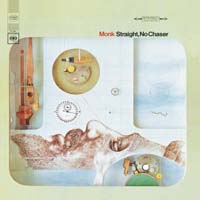 1967Straight, No Chaser
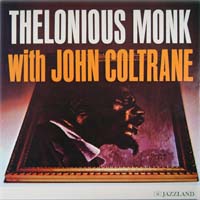 1961Thelonious Monk with John Coltrane
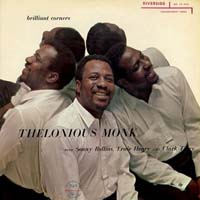 1957Brilliant Corners