ALBUM NOTESThe evolution of Carl Orff in Veni Creator Spiritus
Veni Creator Spiritus- Album Overview
Carl Orff's "Veni Creator Spiritus," released in 1937, is a significant choral work that reflects his evolving musical style and philosophical beliefs. Composed for a large choir and orchestra, this piece is rooted in the medieval hymn "Veni Creator Spiritus," which invokes the Holy Spirit. The work showcases Orff's innovative approach to rhythm and melody, drawing from his earlier experiences with his famous cantata "Carmina Burana."
The album was recorded under the label Deutsche Grammophon, a company known for its commitment to classical music excellence. The recording features performances by prominent vocalists and orchestral musicians, contributing to the rich tapestry of sound that characterizes Orff's work. The combination of powerful choruses and orchestral textures creates an immersive experience that captivates listeners and highlights Orff's unique ability to blend simplicity with complexity.
Orff's collaboration with the renowned conductor and musicologist Hermann Scherchen during the recording sessions brought an added layer of depth to the performance, emphasizing the dynamic interplay between the choir and orchestra. While it did not produce any mainstream singles, "Veni Creator Spiritus" has remained a staple in the choral repertoire and is frequently performed in concert settings. The work is significant not only for its musical qualities but also for its philosophical underpinnings, reflecting Orff's interest in the spiritual and the communal aspects of music. In this piece, Orff evolves from a mere composer to a visionary who sees music as a vehicle for transcendence.
Review
"Veni Creator Spiritus" showcases Orff's mastery of rhythm and his ability to evoke powerful emotional responses through music. The work opens with a stirring invocation that sets the tone for what follows—an exploration of the divine through the human voice. The musical language is both accessible and profound, employing a minimalist aesthetic that highlights the text's spiritual significance.
Orff's characteristic use of percussive elements and strong, driving rhythms gives the work an almost primal energy, inviting listeners to engage with the music on a visceral level. The lyrics, drawn from the original hymn, resonate with themes of creation, inspiration, and the divine presence, making the piece not only a musical experience but also a spiritual journey.
While the composition is rooted in the early 20th-century choral tradition, Orff's innovative orchestration and rhythmic patterns set it apart from his contemporaries. The piece exemplifies his evolution as a composer, who increasingly sought to connect the sacred and the secular through his music. Overall, "Veni Creator Spiritus" is a powerful testament to Orff's artistic vision and his belief in the transformative power of music.
Highlights
- Stirring choral harmonies that evoke deep emotional responses.
- Innovative rhythmic structures that set Orff apart from his contemporaries.
- A profound spiritual message that resonates with audiences across generations.
Weak points
- Some listeners may find the minimalist style overly simplistic.
- The focus on rhythm over melody might not appeal to all classical music aficionados.
- Lack of instrumental variety compared to other orchestral works of the time.
Overall evaluation
"Veni Creator Spiritus" stands as a remarkable example of Carl Orff's evolution as a composer, reflecting his deep engagement with spiritual themes and his innovative approach to rhythm and choral writing. While it may have its limitations, the work's emotional depth and rhythmic vitality make it a significant contribution to the choral repertoire.
Personal rating: 8/10


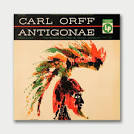 1993Antigonae
 1990De Temporum Fine Comoedia
 1960Carmina Burana
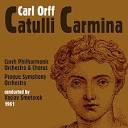 1954Catulli Carmina