Album overview
Gustav Holst's "The Planets, Suite for Large Orchestra, op. 32," premiered in 1918, is one of the most celebrated orchestral works of the early 20th century. Composed between 1914 and 1917, it reflects Holst's fascination with astrology and the influence of the planets on human lives. The suite consists of seven movements, each named after a different planet in the solar system, excluding Earth. The movements are: "Mars, the Bringer of War," "Venus, the Bringer of Peace," "Mercury, the Winged Messenger," "Jupiter, the Bringer of Jollity," "Saturn, the Bringer of Old Age," "Uranus, the Magician," and "Neptune, the Mystic."
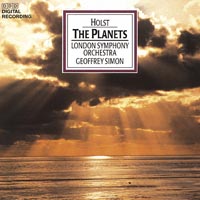
This work was released under several labels, with notable recordings made by the London Symphony Orchestra and the Chicago Symphony Orchestra. The orchestration is rich and complex, featuring a large brass and percussion section, which was novel for its time, contributing to the work's dramatic and emotive soundscapes. "The Planets" has influenced a variety of genres, from film scores to modern classical music, and remains a staple in orchestral repertoire. Holst’s innovative approach to rhythm and harmony, along with his ability to evoke the character of each planet, has secured the suite’s place as a key work in music history.
Review
Holst's "The Planets" transcends mere orchestral performance, it is an evocative journey through the cosmos. Each movement encapsulates the essence of the celestial body it represents, with "Mars" embodying a relentless march of war, driven by pulsating rhythms and stark dissonances. In contrast, "Venus" offers a serene, lyrical quality, showcasing the beauty and tranquility of peace. The juxtaposition of these contrasting themes highlights Holst’s artistic vision, deftly weaving a narrative that resonates on both emotional and intellectual levels.
The orchestration is masterful, utilizing a wide array of timbres to create a lush sound palette. Holst’s innovative use of instrumentation, particularly in movements like "Neptune," where the ethereal voices of the women’s chorus fade into the distance, evokes a sense of otherworldly mystery. The suite not only reflects Holst's interest in the mystical qualities of the planets but also serves as a commentary on the human experience, encapsulating the grandeur and fragility of existence.
Highlights
- Masterful orchestration that captures the essence of each planet.
- Innovative use of rhythm and harmony that was ahead of its time.
- Cultural significance as a staple in both classical and contemporary music.
Weak points
- Some movements may feel dated in comparison to contemporary works.
- The sheer length of the suite can be overwhelming for casual listeners.
- Lack of thematic cohesion between movements may challenge some listeners’ preferences.
Overall evaluation
Holst's "The Planets" remains a monumental achievement in orchestral music, blending celestial themes with profound human emotions. Its innovative structure and lush orchestration have ensured its enduring popularity. While some aspects may feel dated, its cultural impact and artistic vision continue to inspire generations.
Personal rating: 9/10
```

 1981The Planets, Op. 32