
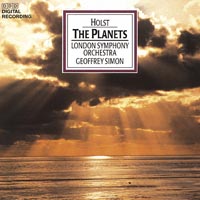
From intro to finale: what The Planets Op.32 delivers
The Planets Op.32- Album Overview
"The Planets Op.32," composed by Gustav Holst between 1914 and 1917, is a seminal orchestral suite that has captivated audiences and musicians alike since its premiere on September 29, 1918. The suite was originally published by the renowned publisher, Novello & Co., and has since become a staple in the classical music repertoire. The composition comprises seven movements, each named after a planet of the solar system and its corresponding astrological character: "Mars, the Bringer of War," "Venus, the Bringer of Peace," "Mercury, the Winged Messenger," "Jupiter, the Bringer of Jollity," "Saturn, the Bringer of Old Age," "Uranus, the Magician," and "Neptune, the Mystic." Holst's innovative orchestration and use of rhythm reflect the early 20th-century fascination with astronomy and the supernatural, making the work both a reflection of its time and a precursor to modern cinematic scores. The piece was first performed by the London Symphony Orchestra, conducted by Adrian Boult, and has since been recorded by numerous orchestras worldwide, contributing to its enduring popularity. Over the years, "The Planets" has been featured in various films and television shows, further cementing its cultural significance. Holst's collaboration with leading musicians and conductors, along with its rhythmic and thematic complexity, has ensured that "The Planets" remains a pivotal work in the orchestral canon.
Review
The richness of "The Planets Op.32" lies not only in its innovative orchestration but also in its ability to evoke a wide range of emotions and imagery. From the aggressive, march-like opening of "Mars" to the ethereal, ghostly conclusion of "Neptune," Holst's masterful use of orchestral color and texture transports listeners to realms beyond the earthly plane. Each movement is distinct yet interconnected, showcasing Holst's understanding of thematic development and contrasting moods. The suite's rhythmic complexity and harmonic language were ahead of its time, incorporating elements of folk music, modal scales, and even jazz influences, which would later resonate in the works of composers like Igor Stravinsky. The absence of a traditional narrative gives the work a sense of universality, allowing audiences to project their interpretations onto the celestial themes. Holst’s musical vision is complemented by the rich timbres of the orchestra, while the inclusion of the women's choir in "Neptune" adds a haunting quality, leaving listeners in a contemplative silence as the final notes fade away. Overall, the artistic vision behind "The Planets" is a testament to Holst's genius, merging the ethereal with the emotional in a groundbreaking way.
Highlights
- The innovative orchestration and rich textures that bring each planet to life.
- The emotional depth and variety showcased in the contrasting movements.
- The cultural significance and influence on modern music and film scores.
Weak points
- The lack of a unifying narrative may leave some listeners feeling disconnected.
- The prominence of certain movements, like "Mars," can overshadow the subtleties of others.
- Some may find the length of the suite challenging for casual listening experiences.
Overall evaluation
"The Planets Op.32" by Gustav Holst is an extraordinary orchestral suite that remains a defining work of the 20th century. Its masterful composition, emotional range, and cultural impact make it an essential listen for both classical music enthusiasts and newcomers alike.
Personal rating: 9/10 1981The Planets, Op. 32