
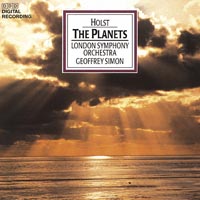
Gustav Holst raises the bar with Journey To The Stars: The Planets
Journey To The Stars: The Planets- Album Overview
Gustav Holst's "The Planets," composed between 1914 and 1917, is a landmark suite in the classical music canon that explores the astrological significance of the planets in our solar system. The suite consists of seven movements, each named after a planet and its corresponding Roman god, capturing a range of emotions and themes. The first performance took place in 1918, conducted by Adrian Boult, and it has since been recorded numerous times, highlighting its enduring popularity. The album was originally released on the HMV label and has been remastered and reissued in various formats over the decades.
The orchestration is rich and innovative, featuring a large orchestra that includes brass, percussion, and various woodwinds, along with a choir in the final movement, "Neptune." Holst's work draws from various influences, including English folk music and mysticism, creating a soundscape that is both otherworldly and evocative. "The Planets" has inspired countless adaptations and interpretations across genres, including film scores and popular music, emphasizing its significant cultural impact.
Collaborators and conductors over the years have included notable figures such as Sir Adrian Boult and Sir Neville Marriner, each adding their unique interpretations to Holst’s vision. The album showcases timeless pieces like "Mars, the Bringer of War," known for its martial themes, and "Jupiter, the Bringer of Jollity," celebrated for its uplifting and memorable melody. The presence of "The Planets" in modern media, from films to commercials, underscores its relevance and the universal appeal of its themes.
Review
Gustav Holst's "Journey To The Stars: The Planets" stands as a monumental achievement in orchestral music, masterfully intertwining complex emotions with grand musical narratives. The sound is dynamic and expansive, with each movement offering a unique auditory experience that transports listeners beyond the earthly realm. The juxtaposition of the dark, ominous tones of "Mars" against the serene, ethereal qualities of "Neptune" illustrates Holst's remarkable ability to convey a wide spectrum of feelings within one suite.
While the composition is primarily instrumental, the music itself tells a story that resonates deeply with human experience and our place in the cosmos. Holst's artistic vision was ahead of its time, incorporating innovative orchestration techniques that continue to influence composers and musicians today. The thematic exploration of astrology reflects a cultural fascination with the universe, making "The Planets" not just a musical work but a cultural artifact that mirrors humanity's quest for understanding and meaning.
Highlights
- The innovative orchestration showcases Holst’s mastery of sound.
- Each movement delivers a unique emotional journey, engaging listeners deeply.
- The cultural significance of the suite spans over a century, influencing various art forms.
Weak points
- Some listeners may find the lack of vocal elements in earlier movements limiting.
- The suite's length might be daunting for those unfamiliar with classical music.
- Modern interpretations may vary widely, leading to mixed receptions among purists.
Overall evaluation
Gustav Holst's "Journey To The Stars: The Planets" remains a timeless masterpiece, illustrating the profound connection between music and the cosmos. Its rich orchestration and thematic depth continue to inspire and resonate with audiences worldwide.
Personal rating: 9/10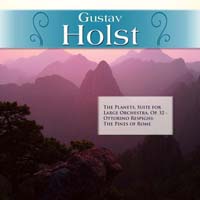 1981The Planets, Op. 32